
A busy road is the objection sellers most want to hide and buyers almost always notice anyway. The instinct to downplay it in a listing is understandable, but it's the wrong call. Buyers who arrive at an open home to discover heavy traffic they weren't expecting feel misled, and that feeling kills offers. The smarter approach is to frame the location accurately, highlight every genuine advantage it carries, and attract buyers who see traffic as a trade-off worth making rather than a problem worth avoiding.
Why buyers hesitate and what that means for your marketing
The concern isn't really the road. It's what buyers imagine the road means: noise at midnight, exhaust fumes drifting through an open window, kids who can't play out front safely, resale risk. Some of those concerns are legitimate. Others are projections. Your marketing job is to distinguish between them, address the real ones honestly, and dissolve the imaginary ones with evidence.
Double-glazed windows, a solid front fence, or a deep setback from the kerb are physical facts that directly counter the noise and safety objections. Name them specifically in the listing copy. "Double-glazed windows throughout the front of the home" does far more work than "quiet and peaceful inside." The first is verifiable; the second sounds defensive.
Choosing the right angles for photography
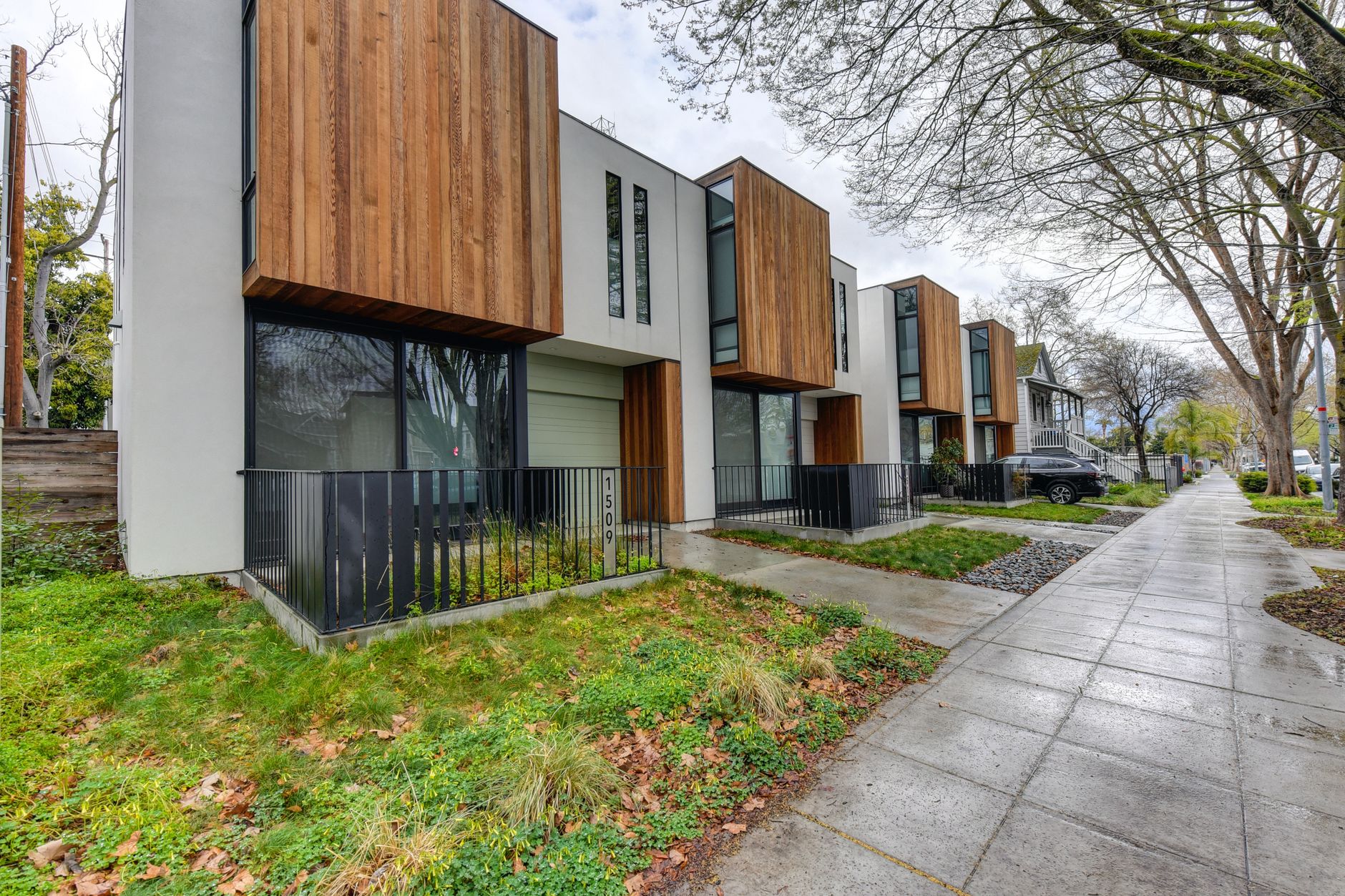
The front exterior shot is the frame that matters most. On a busy road, you have two honest choices: shoot the facade cleanly and let it speak for itself, or pull back wide enough to show the street context with confidence rather than apology. Both can work. What doesn't work is a tightly cropped shot that hides the road entirely, because the buyer will see it the moment they drive past or attend the open home.
Shoot the front elevation at a slight angle to capture depth and dimension. A flat-on shot emphasises the road; a three-quarter angle pulls the eye toward the home's architecture. If there's a fence, a garden bed, or a mature hedge between the property and the kerb, position the camera to include it. That landscaping is doing real acoustic and visual work, and buyers should see it doing that work in the photo.
Drone imagery is particularly useful here. An aerial shot from above and slightly behind the property shows the full block, any rear garden, and the surrounding neighbourhood context without making the road the visual centre of the frame. Kitti Rivers Real Estate Photography uses drone imagery on busy-road listings to shift the buyer's eye from the street to the site itself. If you're thinking about how drone photography for property sales can work for your specific listing, it's worth discussing the angle options with your photographer before shoot day.
What to say in the listing copy
Don't open with the road. Open with what's genuinely good about the location: walkability, proximity to a train station or shopping strip, a school zone, access to major arterials for commuters. Those are real benefits and they're usually the reason the road is busy in the first place. Buyers who want that kind of connectivity exist in every market. They're your target audience.
When you do address the road, be matter-of-fact. "Positioned on a main road with convenient access to the freeway on-ramp and local shops" is honest, specific, and frames the fact as a feature rather than a flaw. Contrast that with vague phrases like "convenient location" that buyers have learned to treat as a red flag for something the seller isn't saying directly.
If the property has had recent acoustic upgrades, include the specifics. Double-glazing brand, installation year, window rating if known. If it hasn't, and noise is a genuine issue, don't fabricate insulation it doesn't have. That kind of misrepresentation creates legal exposure and destroys trust the moment a buyer steps inside.
Writing precise, honest copy for difficult properties is its own skill. The same principles that apply to marketing a property with no off-street parking apply here: name the objection, give it context, and move quickly to the genuine value proposition.
Targeting the right buyer
Not every buyer is deterred by a main road. Investors are often indifferent to traffic noise when the rental yield and tenant demand are strong, and main-road properties frequently deliver both. First-home buyers with a tight budget may actively prefer a main-road property that's priced below the street-facing comparable. Buyers who work from home and rarely drive may care far more about a good internet connection and a workable home office than about the noise from a passing bus.
Paid digital advertising lets you target by these specific criteria. A campaign targeting renters-turned-buyers in a particular postcode, or investors searching for properties with rental return above a set threshold, will reach audiences who've already pre-qualified the trade-off in their own heads. If your agent or photographer network doesn't run targeted campaigns, it's worth asking. Paid social ads for property listings have become one of the most practical ways to find buyers who suit a specific property type rather than broadcasting to everyone and hoping.
Pricing and the market reality
A busy road does typically affect price. The discount varies by suburb, by the volume of traffic, and by how well the property compensates elsewhere. A property with exceptional interiors, a pool, or a large block in a tightly held suburb will absorb the location penalty better than a median-spec home on the same street. Know your comparable sales and be realistic about the adjustment.
Overpricing a main-road property is one of the most common mistakes sellers make. It sits on the market, accumulates days on site, and eventually sells below what it would have achieved with an accurate launch price. Buyers read days-on-site as a signal that something is wrong, and the busy road becomes the obvious explanation. A sharp price from day one generates early inquiry, competitive tension, and often a better final result than a slow, price-reduced campaign.
Open home and inspection strategy
Schedule open homes at quieter traffic windows. Saturday morning before 10am typically sees lower vehicle volumes than mid-afternoon on the same day. If the property has a rear garden, courtyard, or generous indoor living area, make sure buyers spend time in those spaces during the inspection. The contrast between street noise and interior calm is your best live demonstration of how well the property manages its location.
Keep all windows and doors to the street closed during the inspection. Turn on the air conditioning if it's warm enough to justify it. You want buyers to experience the interior as it actually functions day to day, not as a worst-case scenario with every window open and traffic funnelling straight through.
The goal is simple: give buyers the information they need to make a confident decision, attract the ones who'll see genuine value in the location, and price the property accurately enough to convert interest into offers without the slow bleed of a stale campaign.