
No off-street parking is the kind of feature that stops buyers mid-scroll if your listing handles it badly. Handle it well, and most buyers won't dwell on it for long. The difference isn't luck; it's a deliberate marketing strategy that leads with the property's genuine strengths while addressing the parking question before buyers can make it bigger than it is.
Why parking objections are so predictable
Buyers searching online filter by parking before they filter by almost anything else. That's a practical reality of how Australian real estate portals work, and it means a property without a garage or driveway is already being seen by a narrower audience. The buyers who do click through, though, are often genuinely open to the trade-off. They live near public transport, they own one car, or they're buying in an inner-city pocket where street parking is the norm.
Your marketing job is to confirm that trade-off is worth it. Not to pretend the parking situation doesn't exist, and not to bury it in the fine print. Buyers who feel managed on this point walk away. Buyers who feel informed stay engaged.
Lead with what the location offers instead
Parking concerns are almost always proximity concerns in disguise. A buyer who objects to no off-street parking is really asking: "Will this inconvenience my daily life?" Answer that question directly in the listing copy. Name the tram stop, the train station, the café strip. Give distances in minutes on foot, not kilometres. "A 4-minute walk to Collingwood station" is more useful to a buyer than "walking distance to public transport."
If the suburb has a council-issued resident parking permit scheme, say so. This is specific, verifiable information that reframes street parking as a managed amenity rather than an inconvenience. Include the permit zone details and link to the council's parking page if you're marketing digitally. Buyers appreciate the legwork.
What the photography needs to do
Street parking availability is something photography can show, not just tell. If there's reliable street parking directly in front of the property, include a shot that frames the street context. Time it correctly: mid-morning on a weekday when the street is quieter than peak hour, but not empty in a way that looks staged. A single car parked neatly outside the property is actually reassuring to buyers. It shows the street exists and the parking is real.
The exterior shot is also where kerb appeal does double duty. A well-presented facade, good landscaping, and a clean footpath tell buyers the street is pleasant to arrive on, regardless of how they got there. Kitti Rivers Real Estate Photography approaches these exterior shots with the same compositional care as interiors, because the street view is often the first image in a listing carousel.
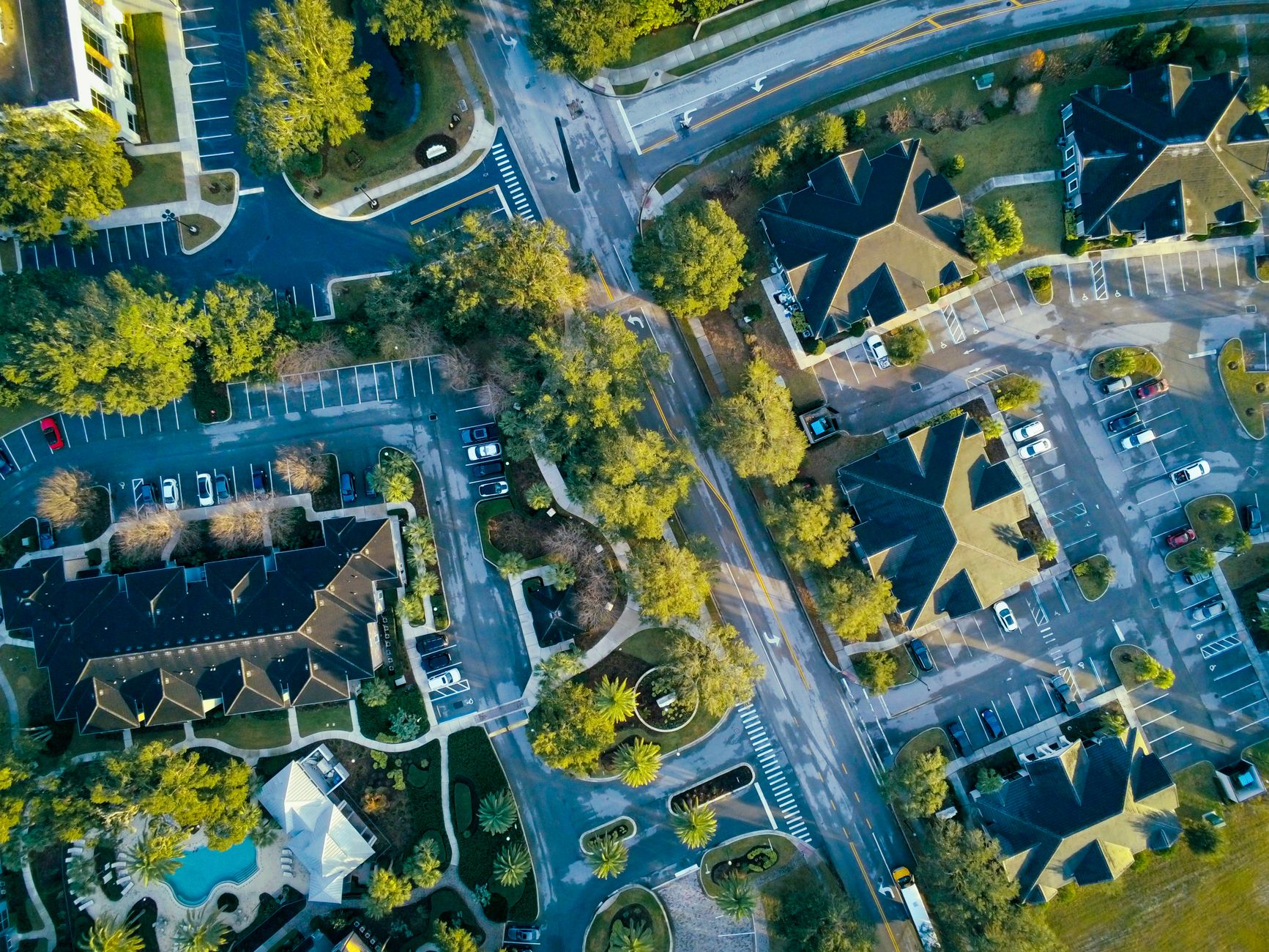
For properties in walkable inner suburbs, a drone shot can show proximity to the train line, the main street, or a tram corridor in a single frame. Drone photography for property sales earns its cost precisely in these situations: a wide aerial that puts the property in context does more than any paragraph of listing copy.
Framing the listing description
Don't open the listing description with parking. Don't close it with a parking disclaimer either. Address it in the middle, where context has already built some goodwill, and frame it as part of a lifestyle pitch: "Street parking is readily available, and with the Glebe tram stop 3 minutes on foot, most residents find a car optional."
That's a confident statement. It doesn't apologise, and it doesn't oversell. It tells the truth in the most useful way possible. Writing listing copy with this kind of precision is covered in more depth in the guide to property listing descriptions that attract serious buyers, which applies directly here.
Avoid hedging phrases like "limited parking" or "parking subject to availability." Those phrases signal weakness and invite buyers to assume the worst. If street parking is genuinely difficult, say something honest but specific: "Metered street parking operates Monday to Saturday, with resident permit exemptions available through the council." Specificity beats vagueness every time.
Targeting the right buyers from the start
Properties without off-street parking have a defined buyer profile. Young professionals who use public transport. Downsizers leaving behind a family home. Investors buying for rental yield in a transit-rich suburb. Marketing to all buyers equally wastes budget and generates unproductive enquiries. Paid digital advertising lets you narrow the audience by location, demographics, and search behaviour, so the people who see your listing are more likely to be the people who don't need a garage.
On social media, targeting by postcode and household size gets you close. Renters in the area who are ready to buy are a natural audience: they already live without a driveway and they know it works. Using paid social ads to get more views on your listing gives a practical framework for this kind of audience-specific approach.
At the open home
Have the parking answer ready before buyers ask. Brief your agent to mention it naturally during the walk-through: "The street out front is usually clear by 9am, and the permit scheme covers residents 24 hours." That matter-of-fact delivery matters. Buyers take their emotional cue from the agent. If the agent treats parking as a non-issue, most buyers will too.
Print a one-page information sheet that includes a simple map showing the nearest stations, tram stops, and any dedicated resident parking zones. Keep it factual. Buyers keep information sheets; they don't keep sales pitches.
When the parking situation is genuinely tight
Some properties are in streets where even casual parking is competitive: narrow laneways, CBD-adjacent terraces, properties near hospitals or schools with peak-hour restrictions. In these cases, honesty is still the right strategy, but pricing has to reflect reality. Buyers will discount the property in their heads regardless of what the listing says. A vendor who prices accordingly and presents beautifully sells faster than one who overprices and waits.
The photography in this scenario should work even harder on interiors. If the outside can't easily show a convenient street, the inside needs to give buyers enough to fall for that they overlook the inconvenience. Beautifully shot interiors, a clear floor plan, and a well-written description shift the buyer's attention to where the property genuinely wins. That's the job.
No off-street parking is a real constraint. It's not a fatal one. Most buyers who've purchased inner-city properties without garages will tell you they adjusted in a week. Your marketing just needs to get them to that realisation before they filter you out.