
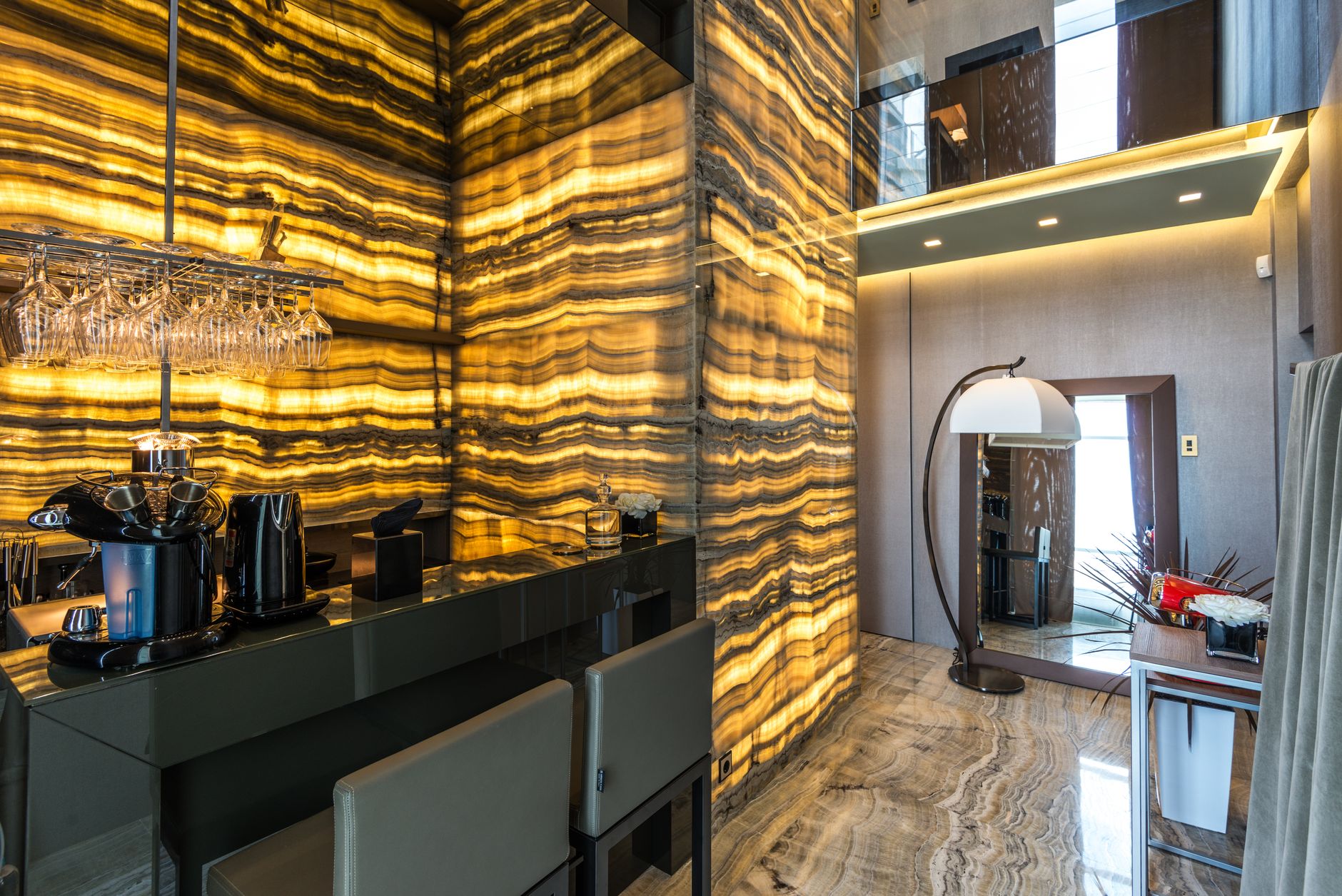
A home bar is one of the most aspirational spaces a property can offer, yet most sellers either ignore it entirely before a shoot or turn it into a cluttered jumble of half-empty bottles and mismatched glassware. Styled deliberately, a home bar reads as a genuine lifestyle feature. Styled badly, it looks like a problem the next owner will have to deal with.
What buyers actually see when they look at a home bar
Buyers process a home bar in about two seconds. In that time, they decide whether it feels like a considered design choice or an afterthought. The difference almost never comes down to how expensive the bar is. It comes down to how intentional it looks. A small built-in bar with three matching glasses and clean sightlines will outperform a sprawling setup with a dozen brands on display and bar towels draped over the edge.
The goal is aspiration, not abundance. Think hotel bar, not bottle shop.
Clearing and editing before you style anything
Start by removing everything. Every bottle, every glass, every utensil, every sign. Put it all somewhere out of frame and start with bare surfaces and shelves. It's much easier to add back the right things than to edit down from chaos.
Pull out your best-looking bottles: the ones with distinctive silhouettes, interesting labels, or premium branding. Aim for 4 to 6 bottles maximum. Arrange them in a loose cluster rather than a rigid row. Varying heights matter here. A tall spirit bottle next to a shorter liqueur next to a wide-shouldered wine bottle creates visual rhythm without looking staged.
Hide the following before the photographer arrives:
- Plastic pourers, rubber bottle stoppers and bar tools with stains
- Promotional merchandise, branded napkins and novelty items
- Opened or near-empty bottles
- Cleaning supplies, rags and dish soap
Glassware: less is more, but quality matters
Glassware is where most home bar styling falls apart. Too many glasses and the space looks cluttered. The wrong types of glass and the whole setup looks domestic rather than refined.
Choose 4 to 6 matching or complementary glasses. Crystal-clear is better than tinted. If you have a rack or shelf above the bar, hang stemware upside down in a single neat row. This reads immediately as intentional. A pair of handsome tumblers on the bar surface beside the bottle arrangement is often all you need at counter level.
Polish every glass before the shoot. A water mark on stemware catches light badly and will show up in photos.
Surfaces, stools and the supporting details
The bar surface itself needs to be spotless. Wipe down benchtops, polish any brass or chrome fixtures, and clear the drain area on a wet bar if there is one. A single cocktail garnish or a small timber serving board with a folded linen napkin can add warmth without clutter, but stop there.
Bar stools are a significant styling variable. If you have stools, position them evenly and at the same height, tucked slightly under the bar edge. Remove any stools that don't match or that look worn. Two is usually the right number for photos. Four stools in a tight space will make the area look compressed.
One carefully placed prop does more than ten random ones. A quality cocktail shaker placed deliberately at one end of the bar reads as sophisticated. A row of branded bar accessories reads as busy.
Lighting the bar correctly
Lighting is where home bars either sing or sink. Most home bars have some combination of pendant lights, under-shelf LED strips, or cabinet lighting built in. Turn all of it on before the photographer arrives and check for any globes that have blown. Warm light suits a bar far better than cool white, so replace any daylight-temperature globes with warm equivalents if you have time before the shoot.
If the bar has glass shelves backlit by LED strips, these create a genuinely striking effect in photos. Make sure the bottles on those shelves are arranged to let the light come through, rather than blocking it with labels facing outward. Turn labels to a three-quarter angle so both the light and the branding read in frame.
Kitti Rivers Real Estate Photography lights bar spaces using a combination of the room's existing ambient light and supplementary flash positioned off-axis to avoid glare on bottles and glassware. Getting this right is one of the more technically demanding parts of a shoot. If you're curious about how ambient light and flash interact in spaces like this, the practical breakdown in flash vs. ambient light in real estate photography covers the mechanics clearly.
How the bar fits into the broader listing
A home bar works best when it's photographed as part of a coherent entertaining story. If your bar is adjacent to an open-plan living or dining area, the styling of those spaces needs to complement it. Mismatched styling between a polished bar and a chaotic dining room tells buyers the listing isn't considered. It's worth reading through the advice on styling an open-plan kitchen and dining zone for photos to make sure the whole entertaining zone reads as a single cohesive space.
The bar shouldn't be the only aspirational space in the listing, but it can be the one that tips a buyer from interested to emotionally invested. Buyers who see a beautifully styled home bar start imagining their own Friday evenings there. That's exactly the response you want from a listing photo.
Common mistakes to avoid on shoot day
The single most common mistake is leaving too much on the bar surface. Sellers worry that an empty-looking bar will seem sparse, so they add more. The instinct is understandable. It's also wrong. Sparse and intentional reads as premium. Dense and busy reads as overwhelming.
The second most common mistake is leaving the bar mirror or back panel uncleaned. Mirrors behind a bar reflect everything in the room, including clutter that's sitting just out of frame. Wipe the mirror down and check what it reflects before the photographer sets up.
Finally, don't mix bar lighting with overhead room lighting unless the colour temperatures match. A warm bar backlit by amber LEDs sitting under a cool-white downlight will produce a colour cast the photographer will struggle to correct in post. Sort the globes first.
A home bar is a compact space with outsized potential in a listing. Treat it with the same care you'd give the kitchen or the master suite and it will earn its place as one of the images buyers remember long after the open home.