
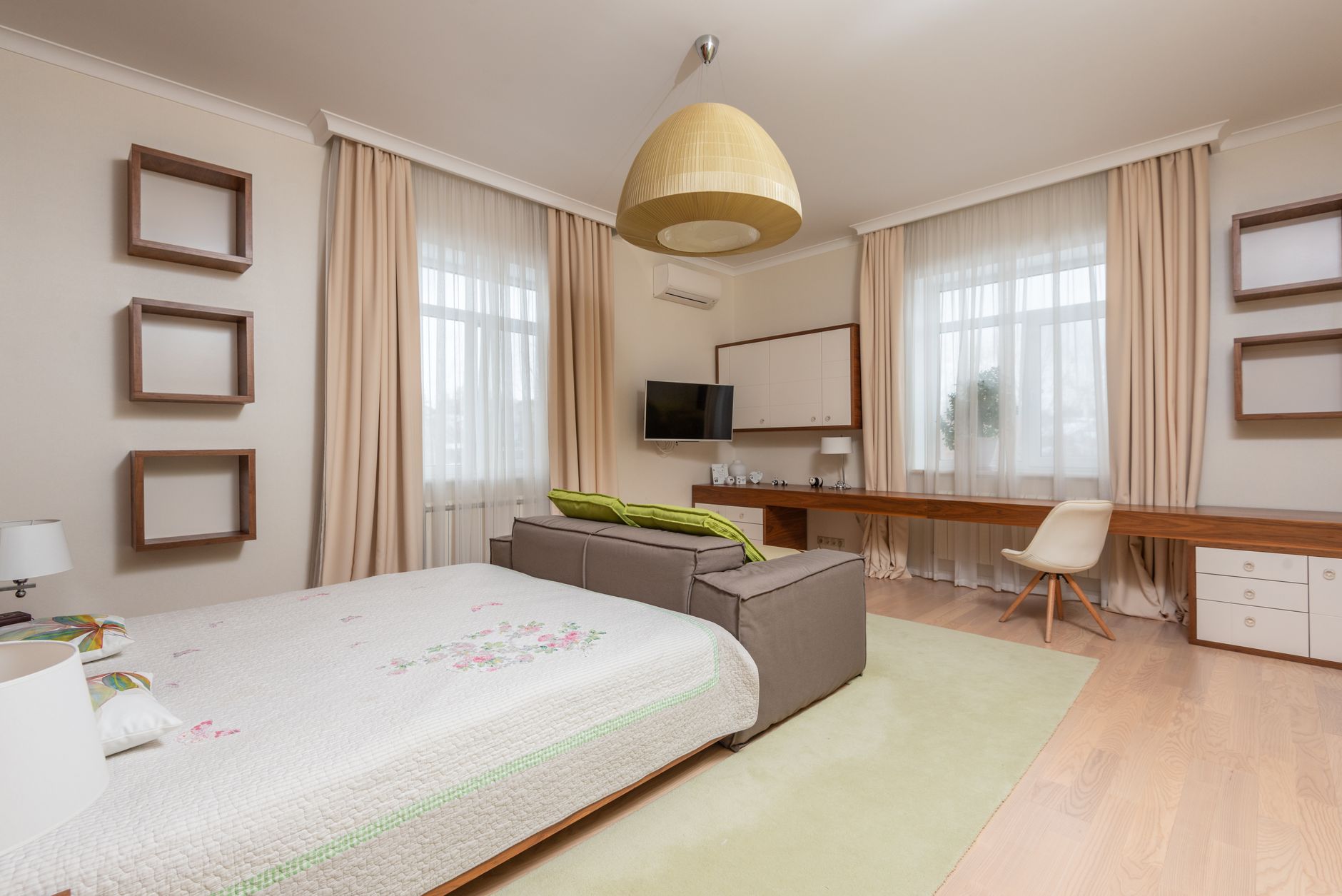
Small rooms are one of the most common challenges in real estate photography. A single bedroom that measures just 3 by 3.5 metres, a narrow laundry, a compact study nook: these spaces can look claustrophobic in photos if the approach is wrong, or surprisingly inviting if it's right. Kitti Rivers shoots tight spaces regularly across Brisbane and South East Queensland, and the difference between a shot that shrinks a room and one that opens it up comes down to a handful of specific decisions made on the day.
Start with the right focal length
Focal length is the first decision that shapes how a small room reads. A 16mm or 17mm full-frame equivalent gives you the widest field of view, but it also introduces barrel distortion that bends walls and makes furniture look oddly curved at the edges. For tight spaces, Kitti Rivers typically shoots between 18mm and 24mm. That range captures the full extent of a room without the fisheye look that makes buyers feel like they're being misled.
The temptation to go ultra-wide is real when a room is genuinely small. Resist it. Buyers notice when doorframes bulge or when the walls appear to bow outward, and distortion erodes trust before they've even clicked through to the second image. A wide-angle lens used thoughtfully does more for a room than one pushed to its extremes.
Choose the corner, not the centre
Shooting from the centre of a room compresses depth. Place the camera in one corner, pointed diagonally toward the opposite corner, and you get the maximum visual distance the room can give you. Every metre of diagonal floor space is working for you. Kitti Rivers sets the tripod low, around 90 to 110 centimetres from the floor, which lowers the ceiling in the frame and makes the floor plane extend further into the image. That lower perspective is what separates shots that feel airy from shots that feel like a storage cupboard.
Height matters too. A camera placed at standing eye level in a small room emphasises the ceiling and crops the floor. Drop it, and the room opens.
Control the light before you touch a camera setting
Natural light is a small room's best friend and its worst enemy in the same window. Harsh midday sun blasting through a single east-facing window creates a blown-out hot spot on one wall and deep shadow everywhere else. The contrast range is too wide for a single exposure to handle cleanly.
Kitti Rivers approaches small-room lighting in two steps. First, diffuse or close any problem windows using a sheer blind or by scheduling the shoot when direct sun has moved off that wall. Second, supplement with portable LED panels positioned outside the camera frame to lift the shadow areas. This keeps the room bright without the contrast spike. For rooms where the window is the dominant light source, exposure bracketing lets you blend a correctly exposed interior with a correctly exposed exterior view, so you don't lose either.
Declutter harder than you think you need to
Every object in a small room competes for space in the frame. A bedside table with three books, a glass of water, a phone charger and a lamp reads as clutter on camera even if it looks perfectly normal in person. The camera compresses everything into two dimensions, and visual noise doubles.
Before a shoot, Kitti Rivers asks owners to remove at least half of what's on any flat surface in compact rooms. That means bedside tables, windowsills, shelves, and bathroom vanities. One lamp, one small plant, and a neat bed is usually enough. The principles of decluttering for a property sale apply everywhere in the house, but in small rooms the impact is immediate and significant.
Use mirrors and reflective surfaces deliberately
A well-placed mirror does two things: it bounces light into a dark corner, and it creates an apparent depth that doesn't physically exist. In a narrow hallway or a compact bedroom, a full-length mirror on the wall opposite the camera can make the room appear to extend beyond its actual boundary. This isn't a trick. Buyers understand mirrors. It simply shows the room at its most spacious, which is accurate if the mirror is a permanent fixture.
Glossy floor tiles and polished timber floorboards work the same way. If the floor reflects light, it extends the visual plane of the room and lifts the overall brightness without adding a single light source.
Keep vertical lines straight
In a small room, tilted verticals are immediately visible. A wall that leans inward or outward makes the space feel unstable and, paradoxically, smaller. Kitti Rivers uses a camera with a built-in level and corrects any remaining keystoning in post-processing. Straight verticals give the eye clean lines to follow from floor to ceiling, which reinforces the sense of height and volume even when neither is abundant.
The correction takes two minutes in Lightroom. Skipping it is one of the most common mistakes in real estate photography of compact spaces, and buyers notice it even when they can't name what's wrong.
Post-processing: brighten, don't fake
A small room benefits from a lift in exposure and a gentle push in shadows during editing. Brighter images read as more spacious to buyers. What Kitti Rivers avoids is over-processing: pumping clarity and texture to the point where the image looks artificial, or whitening walls to a clinical brightness that doesn't match the actual paint colour.
The goal is to show the room at its honest best: the lighting you'd see on a clear day with the blinds open and all the lights on. Buyers who visit in person and find the room darker or smaller than the photo feel deceived, and that erodes confidence at exactly the wrong moment. Edit to the best version of reality, not beyond it.
Small rooms photographed well can hold their own against larger spaces in a listing. The technique is specific and the margin for error is tighter, but the payoff is a set of images that gives buyers a fair and flattering view of every part of the property.