
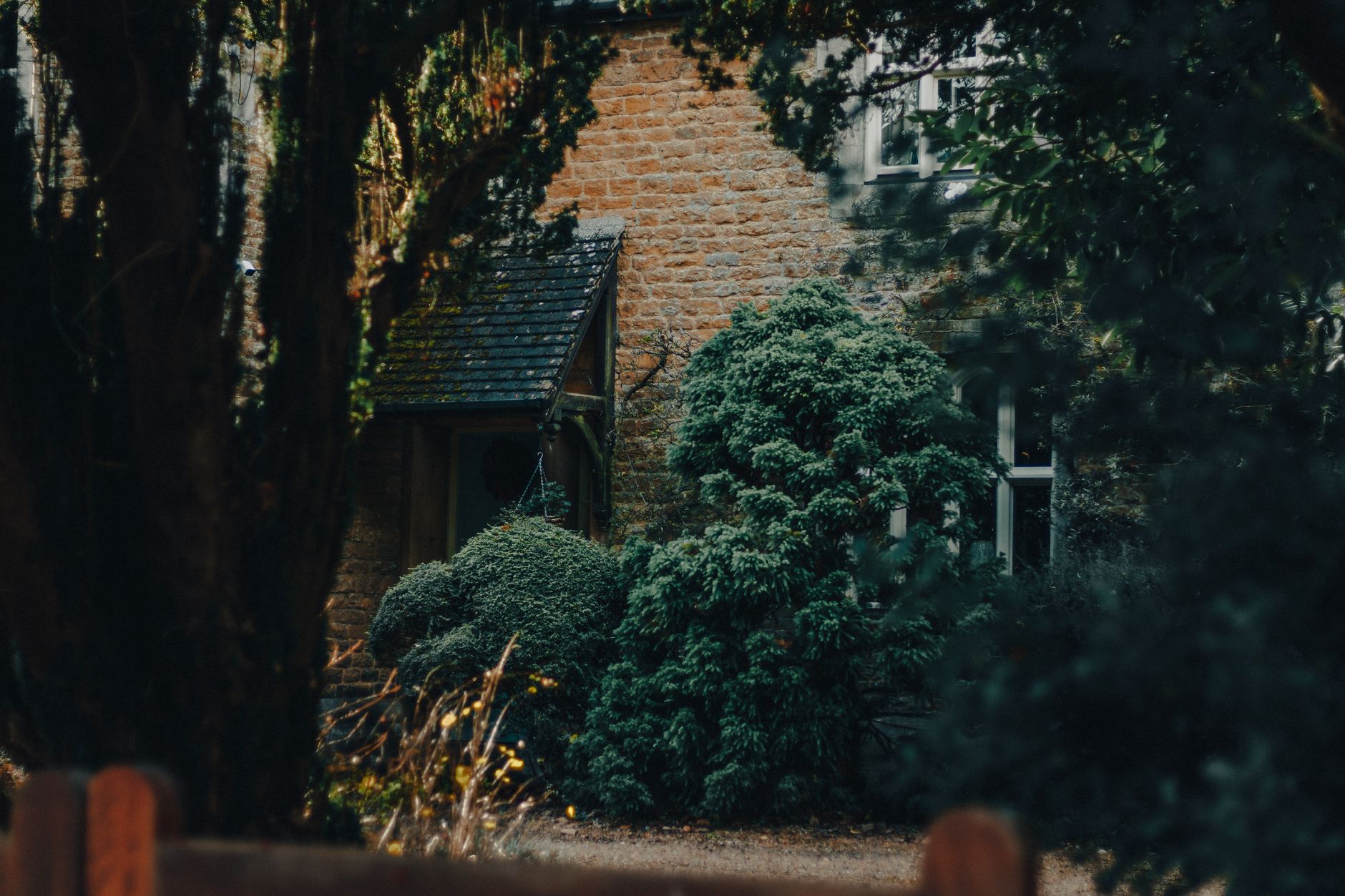
Mature trees are one of the most underrated selling features in Australian residential real estate. A grand old Eucalyptus, a row of established Liquid Ambers, or a single sprawling fig in the backyard can add genuine emotional weight to a listing. Buyers respond to them viscerally. Yet most listing photography either ignores them entirely or lets them swallow the frame in shadow. The difference between the two outcomes comes down to a handful of decisions made before the shutter is pressed.
Why mature trees are both an asset and a technical challenge
The same qualities that make a mature tree appealing to buyers create real problems for cameras. A dense canopy filters and scatters light unpredictably, casting deep, shifting shadows across facades and lawns. A wide-spreading tree placed too close to the building will partially obscure the roofline in a straight-on exterior shot. In summer, full leaf cover can block so much direct sun that the property beneath it underexposes badly against a bright sky.
The tree also competes with the building for visual attention. A wide shot of the front elevation can easily become a photograph of a tree that happens to have a house behind it. That's rarely the intention, but it's a common result when the camera position isn't chosen deliberately.
The goal isn't to minimise the tree. It's to compose the shot so the tree and the property both read clearly, each reinforcing the other.
Choosing the right time of day
Timing is the single most important variable when a large tree is involved. The direction of the canopy shadow relative to the house will shift dramatically between early morning and mid-afternoon, and a shadow that falls across the entire facade at 9am may clear the building by 11am.
Scout the property before the shoot if at all possible. Walk the exterior at different times and note when the tree shadow falls away from the front of the home. North-facing facades in Australia receive more consistent light, but the canopy can still cast a deep shadow depending on tree placement and season. South-facing facades are harder: if a large tree sits to the north of a south-facing home, the shadow problem is nearly constant.
For properties where the tree creates unavoidable shadowing, consider twilight photography as an alternative to a standard daytime exterior. At dusk, the ambient sky provides even, diffuse light that eliminates harsh shadows entirely, and mature trees lit from below with subtle uplighting look genuinely spectacular in a twilight shot.
Camera position and framing
The most common mistake is standing directly in front of the property and shooting straight at it. When a large tree is between you and the building, that position forces the tree into the centre of the frame and reduces the house to background. Instead, step wide and shoot at a 45-degree angle. This brings the tree to the side of the frame where it acts as a natural foreground element rather than an obstacle.
Try shooting from a lower vantage point, too. Getting the camera closer to ground level and angling up slightly can clear the canopy from the roofline, letting the architecture sit above the tree rather than behind it. A height of roughly 1.2 metres is a useful starting point for most single-storey homes.
For two-storey properties, shooting from a slightly elevated position (from a ladder or a raised drone pass) can place the canopy at mid-frame, with the upper storey visible above it and the garden below. This layering gives the image genuine depth and makes the property feel nestled into its landscape rather than obscured by it.
Using drone photography with large trees
Drone photography is particularly powerful for properties with mature tree cover. An aerial perspective eliminates the shadow problem at ground level, reveals the full canopy as a landscape feature, and shows how the trees relate to the property boundaries and surrounding suburb. A mature tree that looks oppressive from the kerb often reads as a genuine asset from 20 metres up.
The most effective drone shots for tree-heavy properties use a medium altitude (around 20 to 35 metres) rather than a high overhead pass. Too high and the trees flatten into a green blob. At mid-altitude, you get the canopy texture, the roofline, and the relationship between building and garden in a single frame. Drone photography for property sales works especially well here because it resolves exactly the spatial ambiguity that ground-level shots create when a large tree is in the way.
Managing light under the canopy
Interior shots near large windows that look out onto a mature tree require careful exposure handling. The canopy creates a mid-bright zone outside the glass, brighter than the interior but darker than open sky. A standard single exposure will often make the window view either overexposed or render the interior too dark.
Exposure bracketing is the most reliable solution. Shoot three to five frames across two stops either side of the metered exposure, then blend in post-processing to recover both interior shadow detail and the foliage texture outside the window. The result is an image that shows the tree as buyers actually see it from inside the home, not as a blown-out white rectangle. If you want to understand when bracketing makes sense versus a single-exposure approach, the practical differences are covered well in the comparison between bracketing vs. single exposure for real estate photography.
Flash fill can also help when shooting interiors with a large tree view, by lifting the interior ambient level closer to the exterior brightness. Keep the flash power low enough that it doesn't flatten the natural light quality in the room.
Seasonal timing and deciduous trees
Deciduous trees change the game entirely. A mature deciduous tree in full autumn colour can be the most visually striking element in a listing. Shoot it then. The warm reds and golds of a Liquid Amber or Chinese Pistache photograph beautifully in the soft light of an overcast autumn afternoon, and a listing launched in autumn with those images has a distinct visual advantage over neighbours photographed in winter.
Winter, by contrast, is the worst time to photograph a deciduous tree-heavy property. Bare branches read as sparse and uninviting in listing photos, especially when the rest of the garden is dormant. If the shoot has to happen in winter, focus on interior hero shots and minimise wide exterior angles that feature the bare canopy prominently.
Evergreen species hold their appearance year-round, but they do shift in density and colour across seasons. A Jacaranda in full November bloom is a genuine listing asset and worth timing the shoot around if circumstances allow.
How to style the area around a mature tree for photos
The ground beneath a mature tree is often neglected: bare soil, leaf litter, exposed roots, or patchy grass. This can undermine the visual appeal of an otherwise strong tree in a listing photo. Before the shoot, rake and clear the area, remove dead branches and debris, and consider adding a simple mulch border if bare soil is visible. A garden bed at the base of the tree looks intentional; bare dirt looks like neglect.
Outdoor furniture placed thoughtfully near a large tree can anchor the space and give buyers a sense of scale. A single bench or a small table-and-chair setting beneath the canopy communicates the lifestyle benefit: shade, privacy, a destination in the garden. It also gives the photographer a compositional anchor that prevents the tree from reading as a shapeless mass of green.
Post-processing considerations
Foliage is one of the most difficult elements to retouch in post-processing without looking artificial. A sky replacement that drops a blue sky behind a dense canopy will show fringing and colour mismatches along the leaf edges. If the sky on the day is overcast and the tree has a complex canopy, it's far better to shoot at the optimal time of day and work with the available sky than to rely on a sky swap in editing.
Colour grading matters too. Green foliage can shift yellow or teal depending on white balance. A slight warm shift in post-processing typically makes foliage read as lush rather than sickly, without looking manipulated.
Putting it together
A property with mature trees is a genuinely valuable listing. Established tree cover takes decades to grow, and buyers know it. The job of the photographer is to show buyers what they're actually getting: shade, privacy, character, and a garden that feels lived-in and settled. That means choosing the right time of day, the right camera position, and the right blend of ground-level and aerial shots to present the trees as the asset they are, not as obstacles to work around.
Bring that same intentionality to the rest of the property and the listing will be stronger for it.