
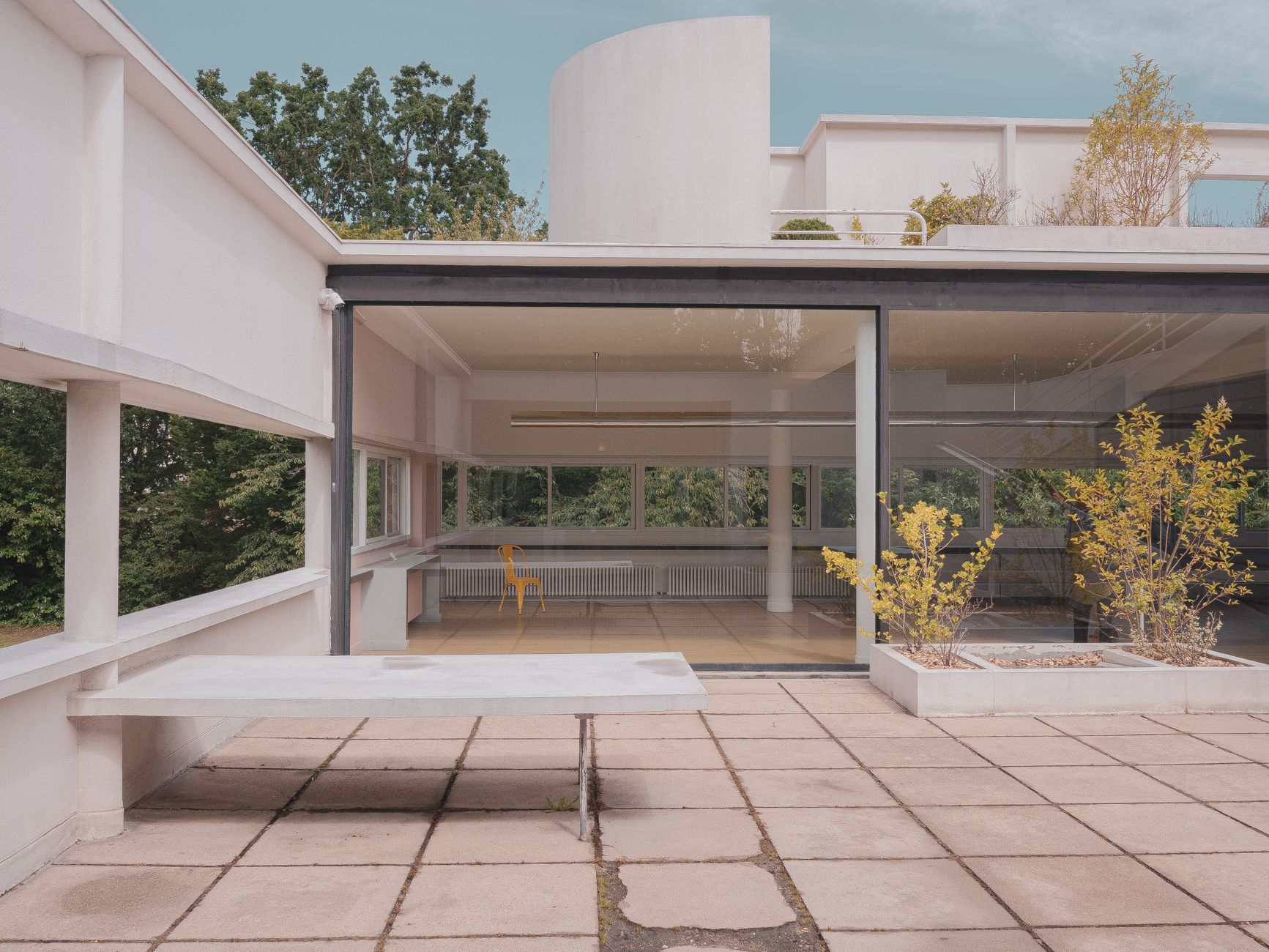
Photographing a flat roof home is genuinely different from shooting a conventional pitched-roof property. The silhouette is lower, the roofline doesn't give the composition a natural apex to anchor on, and the architectural appeal lives in the horizontal lines, the cantilevers, and the relationship between the building and its surroundings. Get those things right and the home looks confident and considered. Get them wrong and it looks like a concrete box.
Why flat roofs challenge standard real estate photography angles
Most exterior real estate photography relies on a low camera position pointed slightly upward. That angle works well for pitched roofs because the roofline rises into frame and creates a natural focal point. With a flat roof, that same angle produces a squat, foreshortened facade with no visual destination for the eye. The proportions look wrong even when the building is genuinely beautiful.
Flat roof architecture is designed to be read horizontally. The strong datum line of the roofline, the overhang, the clerestory glazing - these are the details that give the home its character. You need to photograph at a height that keeps the roofline clearly separated from the wall below it, and at a focal length that doesn't compress or exaggerate the depth of the eave.
A slightly elevated camera position solves both problems at once. Shooting from around 1.8 to 2.2 metres rather than eye level lifts you just enough to show the flat roof plane as a deliberate design element rather than a missing feature.
Lens choice and distortion control
Wide-angle lenses are standard in interior real estate photography, but they need more care on the exterior of a flat-roofed property. A 16mm or 17mm full-frame equivalent shot straight at the facade will bow the horizontal lines and make the roofline tilt in ways that look accidental rather than designed. The architects spent serious time getting those lines level. The photography needs to respect that.
Stay at 24mm to 35mm for exterior shots of flat-roofed homes. Keep the camera sensor plane as parallel to the facade as possible. If you have a tilt-shift lens, this is one of the situations where it earns its place in the bag. If you don't, correct converging verticals and horizontals in post rather than leaving them in the image. A crooked roofline in a listing photo reads as either sloppy photography or a structural problem. Neither is helpful.
The best angles for the exterior
Three exterior angles consistently work well for flat-roofed homes, and they're worth shooting on every job.
- The three-quarter view from a corner. Standing at roughly 45 degrees to the facade shows two planes at once, gives the roof a sense of depth, and lets any overhang or soffit read as a three-dimensional element rather than a thin line.
- The approach shot. If the property has a driveway or forecourt, a shot taken from the entry point looking toward the home puts the building in its landscape context, which is where flat-roof architecture tends to look its most assured.
- The elevated rear or side view via drone. A drone shot looking slightly down at a 20 to 30 degree angle reveals the roof plane itself as a design feature, particularly if it has a green roof, pavers, or a rooftop terrace. It also gives buyers a genuine sense of the site coverage and the relationship to the garden.
Drone imagery is particularly valuable for flat-roofed homes. The aerial perspective is the one angle from which the horizontal architecture reads most powerfully. If you're not already offering drone photography as part of your shoots, aerial imagery is worth considering for any property where the roofline is a design feature rather than a functional afterthought.
Handling light on a flat roof exterior
The flat roof itself can become a reflective or deeply shadowed surface depending on the time of day. Early morning and late afternoon light rakes across the facade at a low angle, which creates shadows under any overhang and gives the building texture. That's usually flattering. Midday light from above, on a clear day, flattens the facade and can bleach the roof plane into a featureless white rectangle.
Overcast conditions are often your friend with flat-roofed modern homes. The diffused light reduces harsh shadow contrasts, keeps the facade evenly lit, and lets the architectural lines do the work without competing with strong directional shadows. If the sky is grey and featureless rather than dramatically overcast, you can replace it in post with a clean blue sky or add a few natural clouds, which works particularly well for modernist architecture where a clean sky suits the aesthetic.
Interior photography: using the architecture to your advantage
Flat-roofed homes often feature high clerestory windows, skylights, or full-height glazing at the perimeter. These create strong bands of light that move through the day, and they're worth scheduling your shoot around. A clerestory window throwing a stripe of warm light across a polished concrete floor at 10am is exactly the kind of atmospheric shot that makes buyers stop scrolling.
The challenge is the same as in any property with strong directional light: the camera sees a higher dynamic range than the final image can hold. Expose for the interior and the windows blow out. Expose for the windows and the room goes dark. The practical answer is to bracket your exposures and blend them in post, or to use a combination of flash and ambient light that lifts the interior to within range of the exterior exposure. The same technique that applies to large windows with blown-out sky applies directly here, because flat-roofed homes almost always have large window runs by design.
Flat ceilings in these homes also give you full control over any pendant or recessed lighting in the space. Switch on every light source in the room before you shoot. The warm interior light contrasted against the natural light from clerestory windows creates depth that a single-exposure ambient-only shot won't capture.
Framing the roof terrace if the property has one
Some flat-roofed homes have an accessible roof deck or terrace. This is a significant selling point and deserves dedicated shots, not just an afterthought. Photograph the roof terrace at twilight if the schedule allows, because the low ambient light outside combined with any terrace lighting creates a mood that day shots can't replicate. Show the view from the terrace, not just the terrace itself. The view is usually the reason the terrace exists.
If the roof deck has furniture, ensure it's styled before you arrive, or carry a few simple pieces with you. A single lounge chair and a side table is enough to communicate how the space is used. An empty flat roof with a balustrade reads as unfinished rather than versatile.
What to avoid
Don't shoot the front facade from a low angle with a very wide lens. The combination produces barrel distortion at the edges, a foreshortened building, and a roofline that appears to slope even though it's flat. It's the single most common mistake on this building type.
Don't rely on a single exterior shot. Flat-roofed homes need more angles than a conventional home to tell their story, because the three-dimensionality of the architecture isn't immediately legible from one view. Budget for at least 4 exterior shots: front three-quarter, rear, drone overhead, and one detail shot of an architectural element such as the soffit, a cantilevered section, or the junction between the wall and the roofline.
Don't underlight the interior. Flat ceilings with recessed lighting often look dim in photos if you rely on ambient light alone. The low ceiling height (relative to pitched-roof rooms) can also make a space feel compressed in a photo if it's not properly lit. Turn on every light, check for mixed colour temperatures and address them in post, and consider a single bounced flash if the ceiling is white and the room reads as flat despite having all lights on.
Flat-roofed homes attract a specific buyer: someone drawn to modernist design, clean lines, and considered architecture. Your photography needs to speak to that taste directly. Show the geometry. Respect the horizontality. Let the building be what it is.