
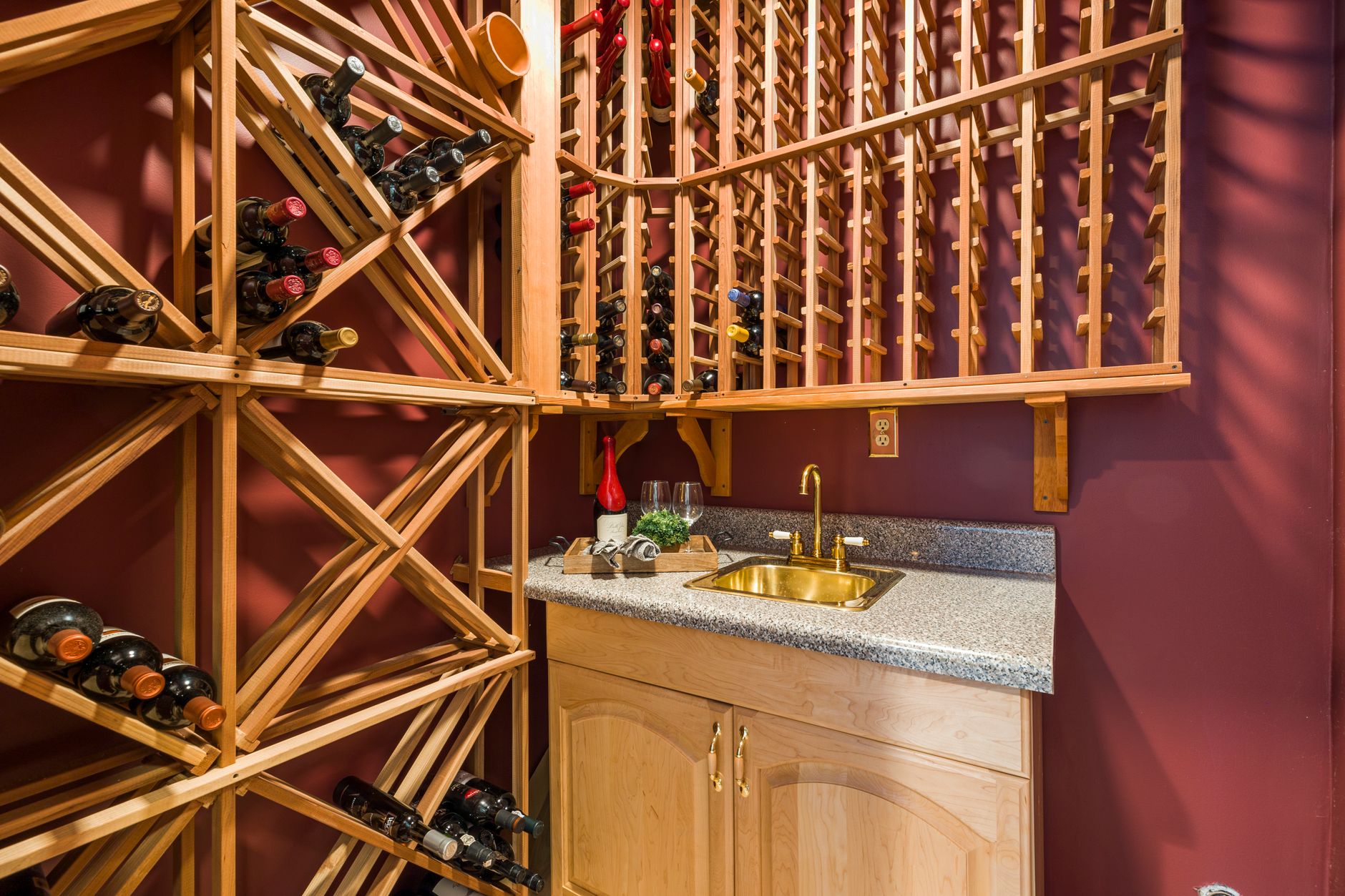
A wine cellar or dedicated storage room sits in an unusual position in a property listing. Buyers rarely lead with it on their must-have list, yet when it's presented well, it can tip a decision faster than a second bathroom. The problem is most sellers either bury it in the copy or photograph it in a way that makes it look like a dim cupboard under the stairs. Done correctly, it becomes a genuine feature that justifies a premium and expands your buyer pool at the same time.
Know your buyer before you write a word
A wine cellar and a dedicated storage room serve very different buyers, and conflating them in your marketing is a missed opportunity. A temperature-controlled cellar with racking and a tasting area speaks directly to wine collectors, entertainers, and buyers in the $1.5 million-plus bracket who associate it with lifestyle. A climate-controlled storage room, on the other hand, appeals to downsizers who need space for art, furniture, or documents, and to families who want somewhere to put the things that don't fit anywhere else.
Get clear on which you have before you write the listing description or brief the photographer. The physical space might be identical. The story you tell about it should not be.
Photography: the most common mistakes
The two errors that kill wine cellar photos are identical: shooting with the available light and shooting from the doorway. Both choices produce the same result: a dark, cramped-looking room with no sense of depth or atmosphere.
A wine cellar deserves a lighting approach closer to what you'd apply to a view property or a statement feature. Use a combination of ambient and supplementary light to lift the shadows without blowing out the warm tones that give a cellar its character. A wide-angle lens pulled back as far as the room allows will show the full sweep of the racking. Shoot at an angle that reveals depth, not one that flattens it.
For storage rooms, the goal is different: you want clean, organised, and spacious. Clear the room of anything that doesn't justify its presence. Show the shelving system, the ceiling height, and any built-in features like hooks, drawers, or climate control units. One strong wide shot and one detail shot of the storage system is usually enough.
Staging a wine cellar for the camera
An empty wine cellar is almost always harder to sell than a well-stocked one. Buyers struggle to visualise the lifestyle when the racks are bare. If the owner has a collection, keep it in place for the shoot and tidy the labels to face forward uniformly. If the cellar is empty, a carefully staged selection of bottles, at least enough to fill two or three sections of racking, transforms the atmosphere completely.
Lighting details matter here. A single pendant or filament globe hanging centrally adds warmth and gives the room a focal point. If the cellar has any decorative tile, stone, or brick, position the light so it grazes the texture rather than washing it flat. These are exactly the principles that apply when photographing exposed brick or stone walls: the texture is the asset, and grazing light is what reveals it.
Remove any cardboard boxes, empty bottles, or bin bags before the photographer arrives. This sounds obvious. It isn't. Most wine cellars photographed for listings contain at least one of these.
Writing the listing description
Don't lead with "wine cellar" as a standalone bullet point. That's how you make it invisible. Instead, fold it into a sentence that carries the lifestyle implication.
Compare these two approaches:
- Weak: "Features include wine cellar, double garage, and alfresco dining area."
- Stronger: "A temperature-controlled cellar with racking for 300 bottles sits beneath the main living area, purpose-built for serious collectors and effortless entertaining."
The second version gives the buyer a number (300 bottles), a use case (entertaining), and a sense of purpose. It also positions the cellar as part of the home's identity rather than an afterthought. For more on how to write copy that works with your photography rather than just listing features, the guidance on property listing descriptions that attract serious buyers covers the fundamentals in detail.
Positioning a dedicated storage room
A dedicated storage room without climate control or wine racking needs a different angle. Its value is practical: it solves the problem of nowhere to put things. That's a genuine selling point for buyers who've compromised on storage in previous homes, which is most buyers.
Photograph it empty and clean, or lightly staged with matching storage boxes and a clear system. The goal is to make the space look generous and intentional, not like overflow from the rest of the house. If the room has a window, shoot toward it. If it doesn't, use a portable light to fill the room evenly from the corner farthest from the camera.
In the listing copy, name the dimensions if they're meaningful. "A lockable storage room measuring 4m x 3m with built-in shelving" tells a buyer more than "generous storage throughout." Buyers doing mental arithmetic on their belongings will notice. Buyers who don't need it will simply move on.
Where to place it in the listing sequence
A wine cellar should appear in the listing photo sequence after the main living and entertainment areas, not at the end with the laundry and garage. It's a premium feature and should be treated as one. If the marketing includes a floor plan, make sure the cellar or storage room is labelled clearly and appears in context to the rooms it connects with.
For a dedicated storage room, place it near the end of the sequence but before utility spaces. It supports the story of the home without needing to anchor it. The sequence matters more than most sellers realise: buyers scan listings in order, and the position of each image shapes how they value what they see.
Digital and social marketing
Wine cellars are genuinely shareable. A well-lit, atmospheric cellar image performs well on Instagram and Facebook because it carries clear lifestyle aspiration. Use it as a secondary feature image in paid social ads, not the hero shot (that should still be the exterior or the main living area), but as a scroll-stopper in a carousel.
In the property description on listing platforms, use the cellar as a hook in the opening paragraph rather than saving it for the features list. Buyers scan the first two sentences before deciding whether to read further. A line about a dedicated 300-bottle cellar in the opening earns attention in a way that a bullet point at the bottom of the page never will.
A storage room is less Instagram-ready but still worth a mention in the digital copy. Frame it around the practical problem it solves: downsizers holding onto furniture, growing families running out of cupboard space, buyers with hobbies that need somewhere to live. Name the buyer rather than describing the room and you'll reach the right person faster.
One thing most sellers overlook
If the cellar or storage room has any special infrastructure, climate control, humidity regulation, a racking system, reinforced shelving, a dehumidifier, mention it specifically. These details signal that the space was built with intention rather than converted from a spare corner. Buyers who want the feature will appreciate the specificity. Buyers who don't will still register that the home was well thought through.
A wine cellar isn't a feature for every buyer. But presented correctly, it's a feature that makes the right buyer feel like this home was built for them.