
Outdoor entertaining areas are often the first thing buyers talk about after an open home, yet they're routinely the most under-prepared space on photography day. Sellers spend hours on the living room and barely glance at the deck. The result is a listing where the alfresco area looks like a car park with furniture. Given how much time Australians spend outside, that's a costly oversight.
Kitti Rivers Real Estate Photography shoots outdoor spaces at every price point, and the difference between a compelling alfresco shot and a flat one almost always comes down to preparation before the camera is even set up. Here's how to style yours.
Start by editing down what's already there
The first step is removal, not addition. Most outdoor areas accumulate far more than they need: extra chairs, hoses coiled on the ground, kids' toys, BBQ covers that have seen better days, dead plants, and mismatched cushions that faded two summers ago.
Pull everything off the deck or patio and only bring back what genuinely looks good. A table with 4 chairs, a matching set of outdoor cushions in a neutral tone, and a simple centrepiece is more compelling than a full suite of outdoor furniture that's cluttered and worn. Think of it the same way you'd approach decluttering a room before interior photos: less is almost always more.
Remove any items that signal maintenance burden. A weathered BBQ with a cracked lid, a mouldy outdoor rug, a cracked pot with a dead plant. These don't just look untidy; they tell the buyer the space needs work.
Set the table deliberately
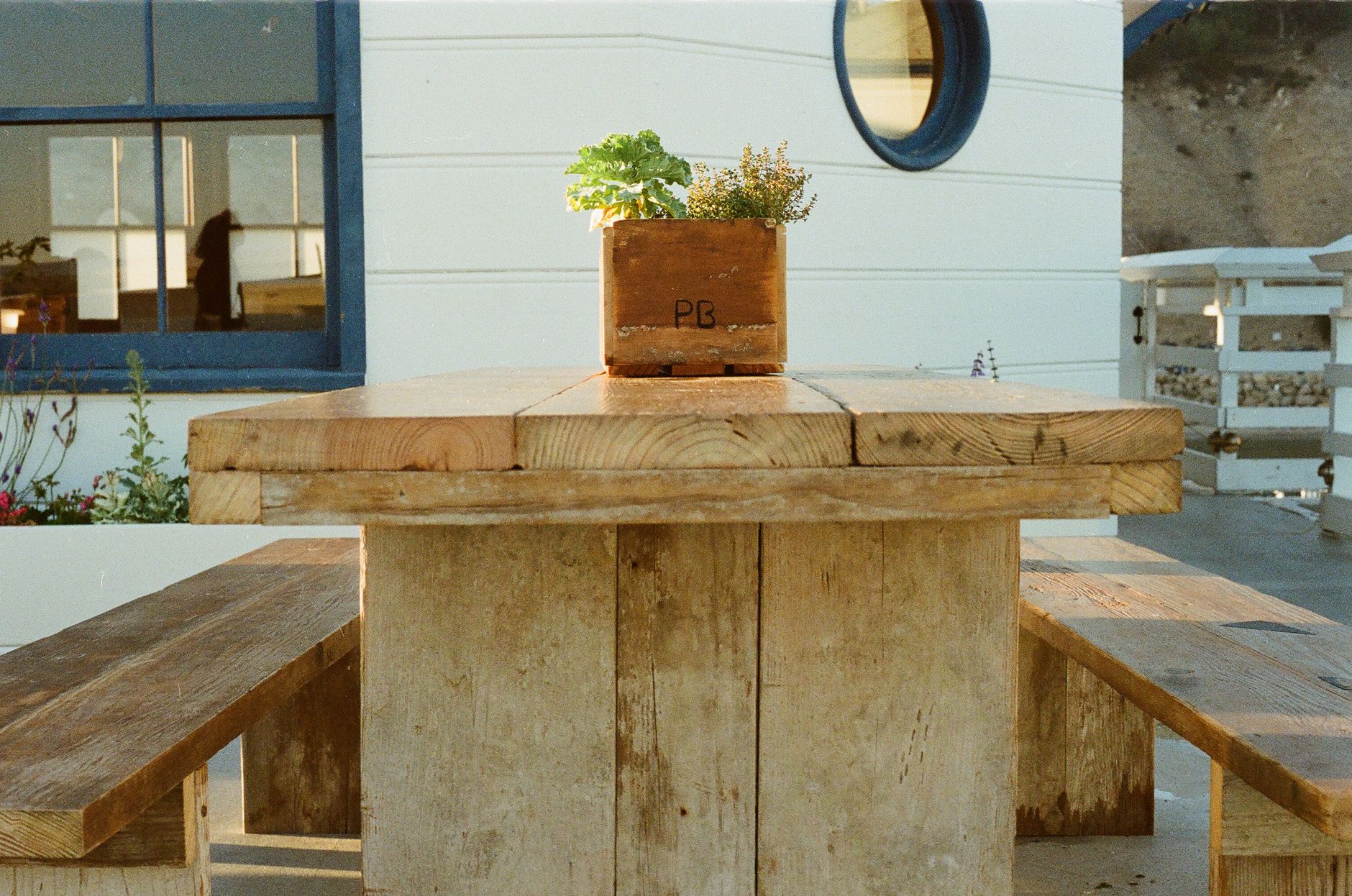
A bare outdoor table reads as empty and uninviting. A set table reads as a lifestyle. You don't need to go overboard. Four place settings, a low centrepiece (something like a potted succulent, a small lantern, or a bowl of lemons), and matching napkins will do it.
Keep the colour palette tight. White or natural-toned tableware, neutral placemats, and cushions in stone, charcoal, or warm sand all photograph cleanly. Avoid heavily patterned or brightly coloured pieces unless the rest of the property has a bold design direction. The goal is for the buyer to picture themselves there, not to distract them.
If the table is glass-topped, clean it to a streak-free finish the morning of the shoot. Glass picks up every fingerprint, dust particle, and smear in photographs, particularly in direct sunlight.
Address the surrounds, not just the furniture
The furniture is only part of the frame. What's in the background matters just as much. Trim any overhanging branches that look scraggly. Edge the lawn if it borders the entertaining area. Sweep the pavers or deck boards clean and use a pressure washer if there's visible grime or mould in the grout lines. A dark, stained deck tells a buyer there's a renovation coming before they even sit down.
Potted plants are your best styling tool in this space. Large pots with healthy, leafy plants placed at the corners of the deck create natural framing. Olive trees, standard roses, and structural succulents all photograph well and read as low-maintenance. Avoid anything that's flowering aggressively in a bright colour that will clash, and make sure every pot is fully watered so the soil looks dark and healthy rather than grey and dry.
Check the fence line too. A rusted hinge, a broken paling, or a screen door that's come off its track will show up in a wide shot. Two screws and five minutes fixes most of it.
Lighting matters more outside than sellers expect
Outdoor shoots are often scheduled for twilight to capture the warmth of ambient lighting. If your outdoor area has string lights, wall sconces, or integrated deck lighting, make sure every globe is working before the shoot. A gap in a string of bistro lights looks exactly as bad in a photo as it does in person.
If you're shooting during the day, know that harsh midday light creates deep, unflattering shadows under furniture and awnings. Choosing between a daytime or twilight shoot is a decision worth making intentionally for an outdoor entertaining area, particularly if your space has a pergola, shade sail, or outdoor kitchen that benefits from being lit against a darker sky.
If there's an outdoor heater or fire pit, position it where it adds to the scene rather than blocks the sightline. Don't light the fire pit for a daytime shoot, but do make sure the fire bowl is clean and free of ash.
Small details that read big in photos
A few finishing touches make the difference between a styled space and a photographed one. Fold a throw rug over the back of one chair. Add a small tray with a candle or a pair of glasses to the side table. If there's a built-in BBQ or outdoor kitchen, wipe the surfaces clean and leave the lid open at a 45-degree angle so the whole unit reads as a feature rather than a box on a bench.
Wind chimes, novelty signs, and personal items like hats on hooks and pet water bowls should all come down. They're charming in life and distracting in photos.
Finally, check the umbrella, if there is one. An outdoor umbrella in good condition, opened fully and centred over the table, photographs as a deliberate design choice. One that's faded, torn, or half-open reads as something the buyer will have to replace.
Connect the outdoor area to the interior
One of the most powerful shots in any outdoor entertaining listing photo is the one taken from inside looking out through bifold or sliding doors. It creates a sense of flow and makes the outdoor area feel like a natural extension of the home. For this shot to work, the space needs to be styled from both directions: the indoor foreground should be clean and the outdoor view should be ready to be the star.
This is why outdoor styling sits within the same discipline as broader home staging for photography. The outdoor area doesn't exist in isolation. It's part of the story the whole property tells, and buyers feel the connection between inside and out even when they can't articulate it.
Get the outdoor entertaining area right and you give buyers one more reason to fall in love on the day. Leave it as an afterthought and you hand them a reason to hesitate.