
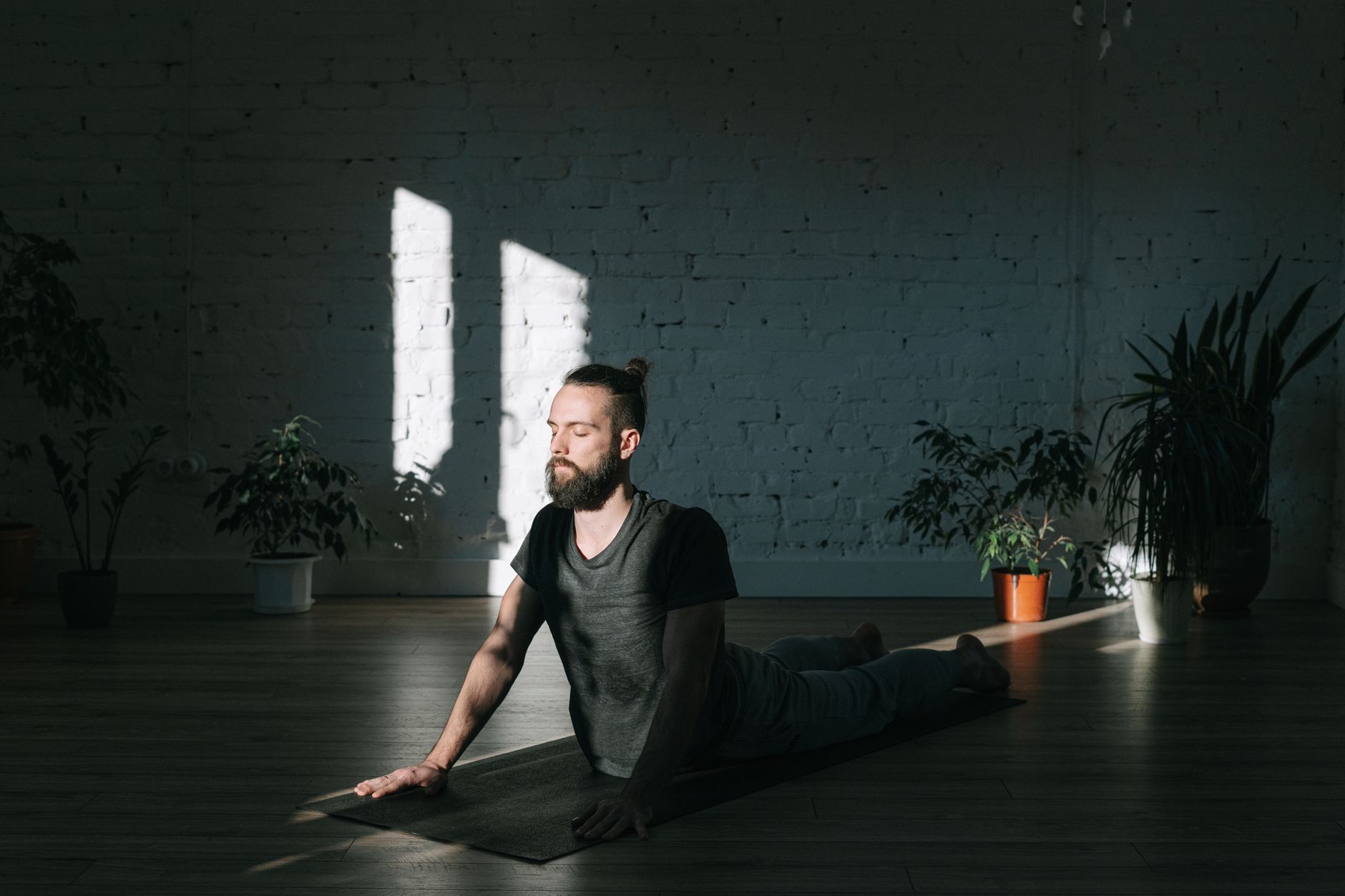
A dedicated meditation or yoga room is one of the more unusual spaces a property can offer, and buyers who see one styled well rarely forget it. The challenge is that it sits between two failure modes: style it too literally and it reads as niche; leave it blank and you've wasted a room that could have been a genuine point of difference. Get the balance right before Kitti Rivers Real Estate Photography arrives on shoot day and you have a feature that adds perceived value well beyond its square metreage.
What buyers actually want to see
Most buyers looking at a meditation or yoga room aren't dedicated practitioners. They're people who've thought about starting, who want a quiet retreat, or who simply respond to the idea of calm in a home. Style the room for that aspiration, not for a specific practice. That means clean, uncluttered, and light. A rolled mat, a small timber shelf with 2 or 3 objects, and soft natural light does more for the room than a full studio setup with blocks, bolsters, and resistance bands piled in the corner.
The room should feel like an exhale. Buyers respond to that feeling even when they can't name it.
Clear the room before you style it
Start with a complete clear-out. Remove every piece of equipment that isn't doing visual work in the photo. Foam rollers, resistance bands, a half-used candle collection, stacked meditation cushions in three mismatched colours: all of it out. You can put one or two pieces back deliberately, but the default position should be near-empty.
Floors matter enormously here. If the room has timber or polished concrete, show it. If it's carpeted, make sure it's vacuumed with the pile running in one direction before the photographer arrives. A clean, open floor reads as intention. This connects directly to the principles behind decluttering for a property sale, where removing rather than rearranging is almost always the stronger move.
Colour and texture choices that work
Stick to a palette of 2 or 3 tones at most. Warm whites, soft sage, dusty terracotta, and natural linen all photograph well and read as restorative rather than stark. Avoid primary colours, bold patterns, and anything that looks like it belongs in a gym.
Texture does the heavy lifting where colour is restrained. A jute mat, a linen cushion, a woven basket, a ceramic bowl. These objects add visual warmth without competing with each other. Buyers' eyes land on texture in a calm room the way they land on the kitchen bench in a kitchen photo.
Styling the key props
Keep props to a short list. A single rolled yoga mat in a neutral colour (not electric blue, not hot pink) placed on the floor near one wall. One low shelf or a small timber stool with a candle, a plant in a simple pot, and one small object that has visual weight, perhaps a smooth stone or a ceramic vessel. That's the entire prop list for most rooms under 12 square metres.
Plants are one of the strongest tools in this room. A fiddle leaf fig, a peace lily, or a trailing pothos in a terracotta or matte white pot adds organic warmth without demanding attention. One plant is ideal. Two can work if the room is large. Three looks like a nursery.
Avoid anything that signals effort. String lights, incense paraphernalia, a dozen crystals arranged on a windowsill: these things read as personal taste rather than a lifestyle offer. The goal is understated, and understated is harder than it looks.
Light is the most important element
Natural light is the single most powerful styling tool in a meditation or yoga room. If the room has a window, orient every styling decision around it. Place the mat so it catches the light. Position the plant where it will be backlit or side-lit. Pull any curtains fully open, or remove them entirely if they're heavy and dark.
If the room has limited natural light, use a warm-toned floor lamp placed outside the camera's frame to lift the ambient level without creating harsh shadows. Kitti Rivers Real Estate Photography uses supplementary lighting to balance these situations, but a room that arrives on shoot day with good ambient light will always produce a stronger result than one that relies entirely on artificial correction. For a closer look at how light handling decisions affect the final image, the guide on flash vs. ambient light in real estate photography covers the trade-offs in practical detail.
What to do with awkward architectural features
Not every meditation or yoga room is a purpose-built sanctuary. Many sellers convert a spare bedroom, a small study, or an enclosed porch. If the room started as something else, lean into the transformation rather than apologising for the proportions.
Low ceilings actually work in this context. A low, quiet room with a mat on the floor and a single plant reads as intimate, which is exactly the quality a meditation space wants. Use that. High ceilings work too, especially if you can get a wide enough angle to show them. The main thing to avoid is shooting from a position that makes the room look compressed or directionless.
If the room is very small, keep the camera lower and shoot toward a window or the lightest wall. This is a technique that applies across almost every compact space, and the principles covered in small space design tips that make rooms feel bigger translate directly here.
Common mistakes to avoid
There are four mistakes that show up repeatedly in meditation and yoga room listings.
- Over-propping. More than 5 or 6 visible objects and the room stops reading as a retreat. It reads as a storage problem.
- Mismatched mats. A worn, faded, or visually busy yoga mat draws the eye for the wrong reasons. Use a new or near-new mat in a neutral tone, or remove the mat entirely and let the floor speak.
- Visible clutter at the edges. Shoes near the door, a folded blanket slipping off a shelf, a phone charging cable on the floor. These details are invisible in person and glaring in a photograph. Walk the perimeter of the room before the shoot and remove everything at floor level.
- Scented candles as performance. A candle with the lid off and wax pooled around the wick looks used, not curated. Use a new candle or a candle in a holder where the wick isn't visible.
Framing the room in the listing
Once the photos are done, the listing copy needs to carry the same restraint. Don't call it a "yoga studio" unless it genuinely has studio-grade flooring, mirrors, and space for a group. "Dedicated wellness room", "meditation retreat" or simply "private retreat" gives buyers room to project their own use onto the space. The aim is to keep the buyer pool as wide as possible while letting the room's atmosphere do the selling.
A meditation or yoga room styled correctly photographs in minutes and stays in a buyer's memory long after they've left the open home. That's a ratio worth investing in.