
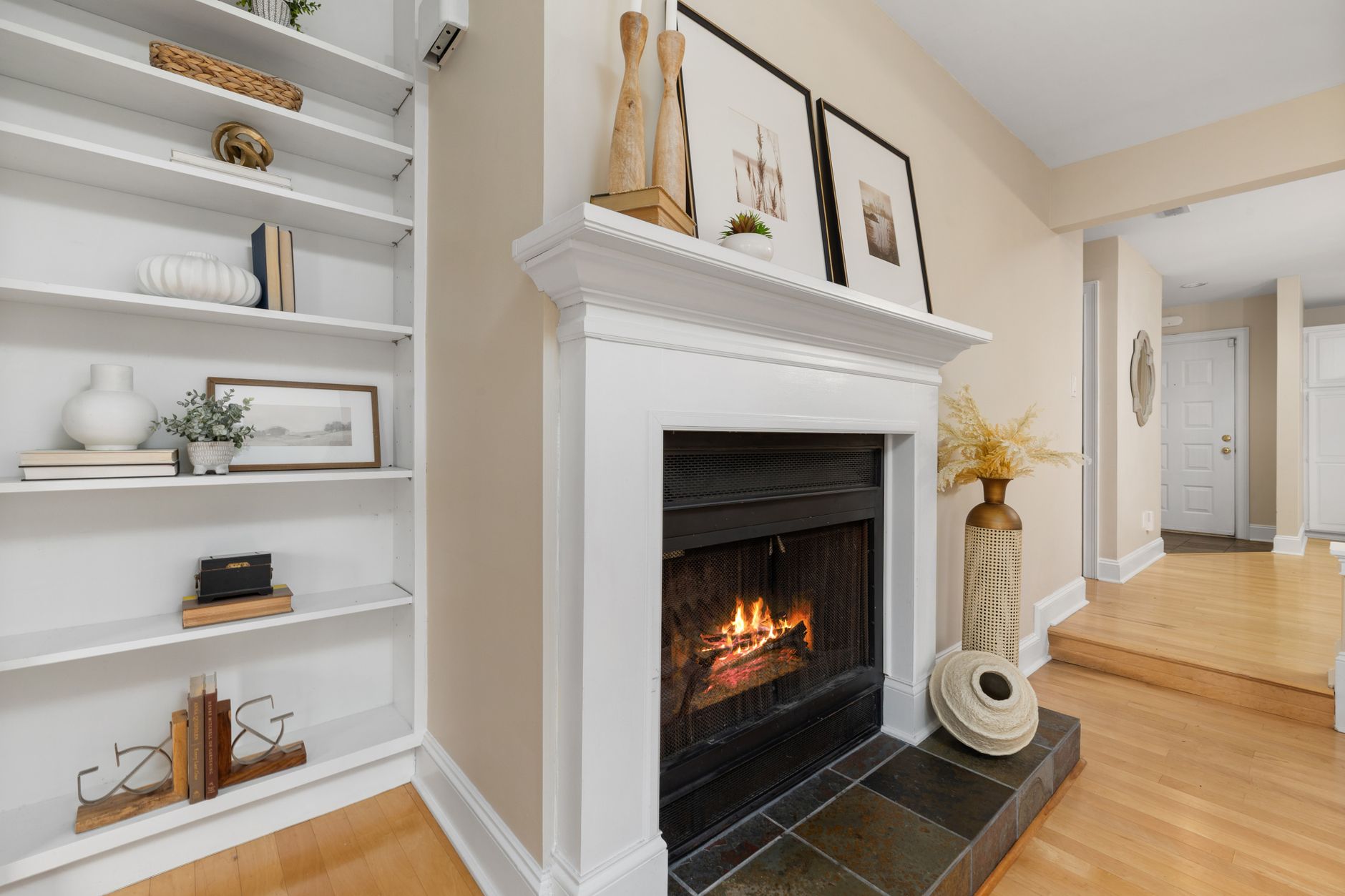
A fireplace surround is one of the few features that can anchor an entire room in a single shot. Buyers notice it immediately, and the way it's styled tells them whether the home feels warm and considered or simply lived-in and forgotten. Get the styling right before the photographer arrives and you've added a genuine emotional centrepiece to your listing. Get it wrong and you've handed buyers a reason to hesitate.
Start by deciding what role the fireplace plays in the room
Before you touch a single candlestick or vase, look at how the fireplace sits within the space. Is it the focal point of the room, or one feature among several? In a smaller lounge, the surround will likely be the hero shot. In a large open-plan living area, it needs to read as part of a composed whole. That decision shapes every styling choice that follows.
Kitti Rivers Real Estate Photography photographs fireplaces in all kinds of rooms, from compact Victorian terraces to sprawling contemporary homes. The principle is consistent: style to the room's purpose first, then to the fireplace's character. A sleek marble surround in a modern home calls for restraint. An ornate timber mantel in a heritage cottage earns a little more warmth and detail.
Clean the surround before anything else
Soot, ash, dust, and water stains photograph harshly. A fireplace that looked fine in person can look neglected in a wide-angle shot. Wipe down the mantel surface, clean the firebox opening, remove old ash, and check the tiles or stone for visible grime. If the firebox is a feature, consider lining it cleanly with stacked logs, a simple candle cluster, or a decorative iron grate. An empty, sooty firebox reads as abandoned.
Brass fittings tarnish and photograph as murky brown. Polish them, or remove them entirely if they're badly discoloured. A clean absence is better than a distracting one.
The mantel shelf: less is almost always more
Most sellers overcrowd the mantel. Framed family photos, random ornaments, candles at different heights, a clock from 2003: all of it competes for attention and makes the space feel smaller and more personal than buyers want to see. Clear the mantel completely, then re-stage it from scratch with a strict edit.
A strong starting point: one hero object (a piece of art, a sculptural vase, or a large mirror leaning against the chimney breast), one mid-height element beside it (a smaller vase with a single stem or a simple candle in a quality holder), and intentional empty space. Three items maximum on a standard-width mantel. For a wider mantel, you can work in an odd grouping of three or five, but keep the heights varied and the palette tight.
Mirrors above the mantel are worth considering carefully. They add light and depth to a room, which the camera loves, but they also reflect the photographer and the tripod. Kitti Rivers Real Estate Photography manages this with precise camera positioning, but it's worth discussing with your photographer before shoot day so the angle is planned in advance.
Colour and material: keep the palette tight
Pick two or three tones for the mantel styling and hold to them. Neutral bases (white, stone, warm taupe, black) with one accent work best for photography because they don't compete with the room's existing palette. If the surround itself is white-painted timber, add warmth through natural textures: a linen candle, a dried botanical stem, a small ceramic object in a warm off-white.
Avoid shiny, highly reflective objects unless they're a deliberate design choice. Polished chrome, mirrored tiles, and lacquered ceramics catch light unpredictably and can introduce hot spots that draw the eye away from the surround itself. Matte finishes photograph cleanly.
The firebox: frame it as a feature, not a void
An empty firebox is the styling detail most sellers miss. Even in warmer months, when the fireplace isn't in use, the opening needs to tell a story. The three most reliable approaches are:
- Stacked firewood. Neatly stacked, uniform-sized logs fill the firebox with texture and warmth. Choose logs of consistent diameter and stack them with the cut ends facing out.
- Candle grouping. Three or five pillar candles at varying heights, unlit, placed directly on the firebox floor or on a simple iron tray. Candles suggest warmth without requiring the fire to be burning during a daytime shoot.
- Greenery or botanicals. A large leafy branch, a dried pampas stem, or a simple fern frond placed loosely in the firebox opening. This works especially well for contemporary homes with a clean, textural surround.
If the fireplace is a working gas or electric unit, follow the manufacturer's guidance on what can safely be placed inside or in front of it.
Lighting and the camera's relationship with the firebox
The interior of the firebox is often very dark relative to the rest of the room. This contrast can be difficult for the camera to handle without losing detail in either the firebox or the room itself. Your photographer will manage exposure bracketing or supplementary lighting to balance this, but you can help by choosing lighter-toned styling inside the firebox (pale logs, white candles, light-coloured botanicals) rather than dark objects that disappear into the shadow.
If the fireplace has a functioning flame option for photography, discuss timing with Kitti Rivers Real Estate Photography before the shoot. A real flame reads beautifully in still images but adds technical complexity around exposure and colour temperature. Twilight shoots are particularly well suited to fireplace flame photography, where the warmer ambient light harmonises with the flame's colour.
The area in front of and around the surround
The surround doesn't exist in isolation. The hearth rug, the furniture arrangement, and the objects on either side of the firebox all appear in the same shot. Pull the hearth rug straight or remove it entirely if it's worn, patterned in a way that clashes, or too small for the space. If there's a fireside chair or sofa positioned facing the hearth, style its cushions and throw to complement the mantel palette.
Keep the floor area in front of the firebox clear. Fireside tools, log baskets, and decorative screens can add character if they're in good condition and positioned deliberately, but a single quality piece is better than a cluster of mismatched accessories. Styling the broader living room around the fireplace as a focal point, rather than as a separate task, produces a far more cohesive result in the final images.
Heritage surrounds: work with the character, not against it
A Federation-era cast iron insert with original tiles, a Victorian marble surround, or a mid-century brick fireplace each carry their own design logic. Don't try to modernise them with contemporary styling. Lean into the period detail. Original tessellated tiles benefit from minimal styling above the mantel so the tiles themselves remain the story. A restored timber mantel with corbels and dentil moulding needs space to breathe, not a cluster of objects that obscures the craftsmanship.
If the surround has been painted over original materials, consider whether a careful reveal (even partial) is worth the effort before the shoot. Exposed original timber or stone is almost always more compelling to buyers than painted-over detail, and deliberate pre-shoot staging decisions like this consistently outperform last-minute styling.
What to avoid on the day
A few mistakes come up repeatedly on shoots where the fireplace surround hasn't been properly prepared. Artificial flowers or fruit look synthetic in high-resolution images. Candles burned to dramatically different lengths read as neglected. Seasonal decorations (Christmas cards, Easter eggs, birthday cards on the mantel) date the listing and personalise the space in exactly the wrong way. Framed family photos are the single most common mantel item and the one that should always come down before the photographer arrives.
The fireplace surround is one of the most photographed features in any listing that has one. Style it with intention, keep the palette restrained, and treat the firebox opening as a design element in its own right. Those three steps consistently produce shots that buyers remember.