
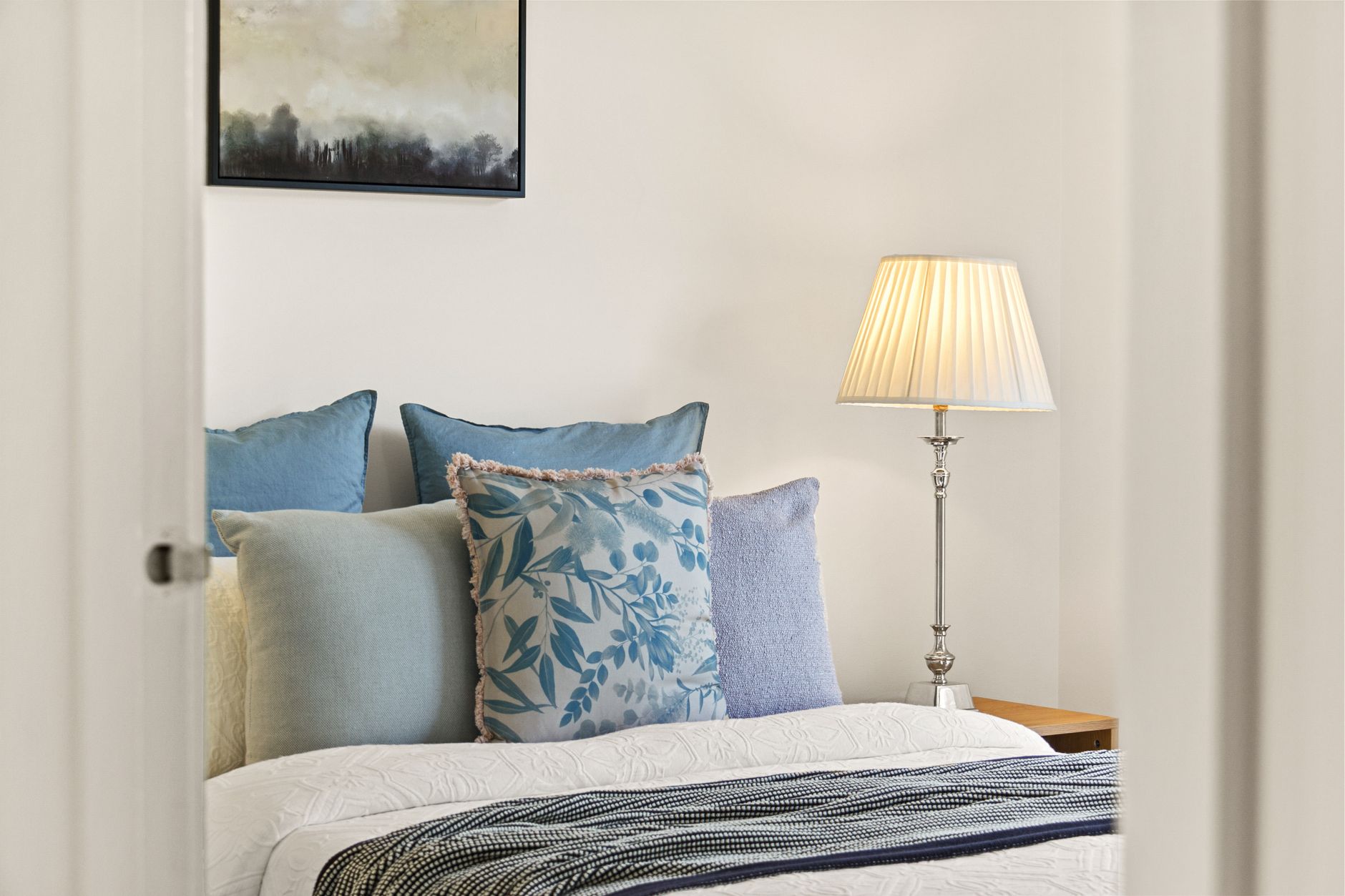
Bedroom styling for property photos is one of the most overlooked parts of pre-sale preparation. Sellers spend hours on the kitchen and living areas, then dress the bed with whatever linen is already on it and call it done. The problem is that buyers spend a surprising amount of time scrutinising bedroom shots, and a flat or cluttered image can quietly undermine confidence in the whole property.
The goal isn't a magazine cover. It's a photograph that makes someone feel the room is calm, spacious, and genuinely liveable. That feeling comes from specific decisions, not from spending a lot of money.
Start with the bed: it carries the whole room
The bed is the anchor. Everything in a bedroom photo reads in relation to it, so get the bed right before touching anything else.
Use white or off-white linen as your base layer. Neutral bedding reads as larger, cleaner, and more versatile than patterned sets, which can date a room or clash with the wall colour. Layer a textured throw across the foot of the bed, folded in thirds so it looks intentional without hiding the linen beneath it. Add two rows of pillows: sleeping pillows in cases that match the sheets, then two or three Euro pillows in a complementary tone behind them.
Pull the sheets taut. Every wrinkle reads in a photograph, even on a wide shot. If your linen is creased from storage, run a clothes steamer over it. This takes four minutes and makes a visible difference.
Control what the camera can see
A camera lens picks up more than the eye does when you're standing in the room. Personal items that register as background noise in person become focal points in a photo. Remove everything from bedside tables except one or two intentional objects: a lamp, a small plant, a single book. Clear under the bed entirely if it's visible from the shooting angle.
Built-in wardrobes are fine to leave closed. Freestanding wardrobes with visible shelving should be tidied or styled. If the wardrobe has mirrored doors, the photographer will need to manage reflections, so keep the space in front of it clear. This connects to a broader point about decluttering for a property sale: the bedroom benefits from the same ruthless edit you'd apply to the kitchen bench.
Curtains and blinds deserve attention too. If the room has sheers, close them before the shoot to soften harsh light while keeping the space bright. If the window treatment is dated or sagging, consider replacing it. A new set of linen curtains costs little and photographs cleanly.
Lighting and colour: the two things buyers notice first
Bedroom colour tends to be more personal than any other room in the house, which makes it a liability if the choice is strong. Deep blue or terracotta feature walls are legitimate design choices, but they photograph as polarising and they narrow buyer appeal. If you're repainting before sale, choose a warm white or a pale greige. These tones read as calm in photographs and don't compete with the bedding or furniture.
Lighting in a bedroom photo comes from three sources: natural light through the window, ceiling fixtures, and bedside lamps. Turn all three on before the photographer arrives. The layered effect adds warmth and depth to the image. Avoid mixing warm and cool globes in the same shot; the camera will struggle to balance the colour temperature, and the result will look uneven. Swap any cool-white globes for warm-white equivalents. For a deeper look at how light affects the final image, the guide to lighting ideas for modern homes covers this across the whole house.
Furniture placement and the importance of symmetry
Most bedroom photos are shot from the doorway or just inside it, looking toward the bed. This means the photographer will capture whatever is flanking the bed on both sides. Symmetry works well here: matching bedside tables, matching lamps, and matching accessories read as intentional and visually settled in a photo.
If the room only has space for one bedside table, position it on the camera-facing side. That's the detail a buyer will see first. The other side can be bare or have a small stool; the camera won't linger on it.
Check the furniture placement from the shooting angle specifically. A chair that looks fine from the doorway might overlap the bedhead and create visual clutter in the frame. Move it to a corner, angle it slightly, or remove it if it's not adding anything. Less furniture in the frame reads as more space.
Small details that show up in close shots
Professional photographers often shoot a feature detail in the master bedroom: a styled bedside table, a textured cushion arrangement, or a vignette near the window. These close shots appear in the listing gallery and give buyers a sense of finish.
Set up one clear detail worth photographing. A timber tray with a candle and a small succulent on the bedside table is enough. A woven basket on the floor beside the bed adds texture without bulk. Avoid fake flowers; they read as cheap in close-up shots and are easy to spot.
Check the skirting boards and light switches. Scuffs and dirty switch plates don't show in person, but a camera with proper lighting will pick them up. A quick clean with a damp cloth takes five minutes.
Children's bedrooms and spare rooms
A child's bedroom doesn't need to look like a boutique hotel. It needs to look tidy, spacious, and appropriate for the room's size. Remove excess toys from the floor, tidy the desk if there is one, and make the bed with simple, coordinated linen. Avoid styling with too many soft toys on the bed; a couple of well-placed cushions is enough.
A spare room used as storage is a harder problem. If it can't be cleared enough to function as a bedroom in the photo, consider whether it's better photographed as a study or a sitting room with a daybed. A staged purpose reads better than a half-cleared storage space. The principles from home staging tips that make every room photograph beautifully apply directly here: every room in the listing should read as intentional.
The 10-minute walkthrough before the photographer arrives
On the morning of the shoot, walk the bedroom with fresh eyes. Check the bed is smooth and the pillows are upright. Remove any items from the floor. Close the wardrobe doors. Turn on all the lamps. Open the curtains or adjust the blinds to let in natural light without creating a blown-out glare. Pull the bedside table objects into a tighter grouping.
Ten minutes of deliberate attention will show clearly in the photographs. Buyers form emotional responses to bedroom images faster than they do to any other room. A calm, clean, well-lit bedroom photo gives them a reason to book the inspection.