
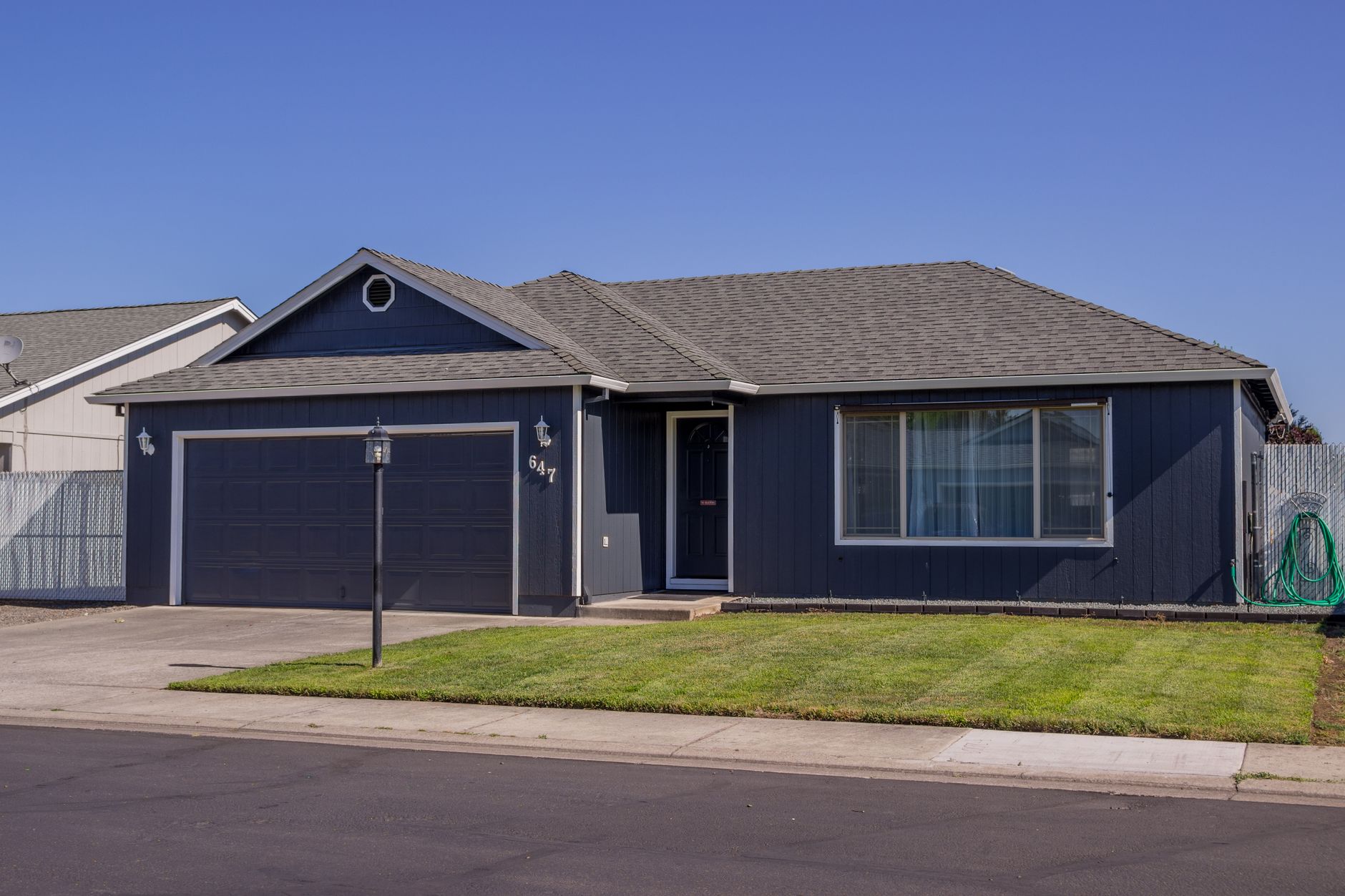
A flat or featureless exterior is one of the most common challenges sellers face, yet it's rarely talked about directly. Most kerb appeal advice assumes there's something to work with: a porch, a pitched roof, interesting brickwork, mature hedges. When your home's facade is a plain rendered wall and a single-panel roller door, those tips don't apply. But a plain exterior doesn't automatically mean a weak result. It means the presentation strategy has to work harder, and in specific ways.
Why featureless exteriors underperform in listings
Buyers make their first judgement about a property within seconds of seeing the listing photo. A facade with no visual hierarchy, no depth, and no obvious focal point gives the eye nowhere to go. The brain reads it as "nothing interesting here" and moves on. That's the real problem: not that the exterior is plain, but that a plain photo of a plain exterior gives buyers no reason to pause.
The fix isn't cosmetic surgery on the building. It's controlling every element that sits within the frame: landscaping, lighting, the approach angle, the time of day, and the small surface details that can add warmth and texture without renovation.
Preparation: the things that cost little and pay back well
Before photography day, focus on the four controllable variables: cleanliness, greenery, lighting, and the front entry.
A high-pressure wash of the driveway, paths and facade removes staining that photographs as decay even when it isn't. Paint the front door. Not a dramatic colour necessarily, but something fresh. A freshly painted door is the single highest-return cosmetic improvement on a featureless front. Add two matching potted plants on either side of the entry. Symmetry creates the impression of intention, and intention reads as care.
If the front garden is bare lawn or exposed soil, lay a roll of fresh turf or add a low garden bed with simple plantings. Mondo grass, agapanthus, and low box hedging all photograph cleanly and install in a day. Garden lights along a path or uplights on a tree cost under $200 and transform an evening shot completely. Speaking of which, twilight photography is particularly powerful for featureless facades because artificial light creates the warmth and drama the architecture doesn't supply on its own.
The photography approach for a flat facade
A straight-on, eye-level shot of a flat facade is the worst possible framing. It eliminates any sense of depth and turns the building into a diagram. The photographer needs to work the angle.
Shooting from a slight 45-degree angle introduces perspective lines and makes even a single-storey box feel like it has dimension. A lower camera position looking slightly upward adds height. Including a section of driveway or pathway in the foreground creates a leading line that pulls the eye toward the entry. Foliage framing at the edges of the shot softens the geometry. None of this is trickery. It's what good architectural photography does with every building.
For homes where the exterior is genuinely the weakest part of the listing, consider leading the photo gallery with a strong interior shot instead. Buyers who are drawn in by a beautiful kitchen or a light-filled living room are already engaged before they reach the exterior image. That sequencing decision can meaningfully change how the facade is received.
Drone photography can also reframe a featureless ground-level facade entirely. An aerial shot that shows the property in context, particularly if the block is generous or backs onto a park, shifts the conversation away from the architecture and toward the land. Kitti Rivers Real Estate Photography uses drone imagery precisely for this reason: to find the angle that tells a better story about the property as a whole.
Positioning in the listing copy
Don't apologise for the exterior and don't ignore it. Address it by shifting the frame. Words like "low-maintenance facade," "clean-lined and contemporary," or "architect-efficient footprint" are accurate and redirect attention without overpromising. The copy should move quickly from the street to the inside, where the home's strengths are likely concentrated.
If the block itself has merit, lead with that. "Set on a 650 sqm north-facing allotment" tells the buyer something they value before they've registered the architectural plainness of the building. Position the land, the location, the internal amenity, and the lifestyle. These are the things that hold value regardless of facade style.
Understanding how kerb appeal actually functions in a buying decision helps clarify which elements matter most to buyers at the street level and which can be addressed through smart presentation choices.
Targeting the right buyers
A featureless exterior often signals things certain buyers actively want: low maintenance, rental potential, or a renovation opportunity. Investors don't care about the facade at all. Buyers who intend to renovate are looking past it. First-home buyers prioritising price point over prestige aren't bothered by it either.
Shaping the marketing toward these buyer groups rather than aspirational downsizer or prestige buyers is a practical decision that improves your campaign. Think about where these buyers look and what language they respond to. A property with a plain exterior and a solid internal layout should appear in searches for "renovator's delight," "investor special," or "blank canvas," not just in the standard residential feed.
The same principle applies to how you think about selling a home with a difficult floor plan: find the buyer who sees the upside that others are skipping past, then write and photograph for them specifically.
What not to do
Don't spend money on facade improvements that don't photograph. New gutters, repointed mortar, and freshly sealed concrete are worthwhile maintenance items but invisible in a photo. Spend the same budget on things the camera sees: paint, plants, lighting, and a styled entry.
Don't use an ultra-wide lens to create a false sense of grandeur. Buyers who arrive at the property after seeing a manipulated photo feel deceived, and that emotional response carries into the negotiation. The photography should be genuinely flattering, not fictitious. Realestate.com.au and the major listing portals both have photo guidelines that prohibit digitally altered structural elements for exactly this reason.
Don't omit the exterior shot entirely. Buyers who can't see the outside will assume the worst and often won't attend the inspection. A well-executed exterior photo, even of a plain building, is always better than an absence.
The honest truth about plain facades
Australian residential streets have thousands of plain, rendered, single-storey homes built between the 1960s and 1990s that sell well every week. Buyers understand that not every property is architecturally distinguished. What they don't forgive is a listing that feels deceptive, rushed, or indifferent. A confident, well-prepared presentation of an ordinary-looking home tells buyers the seller is serious, the property is maintained, and there's value inside worth inspecting. That's the real job of the exterior photo: not to wow, but to qualify.