
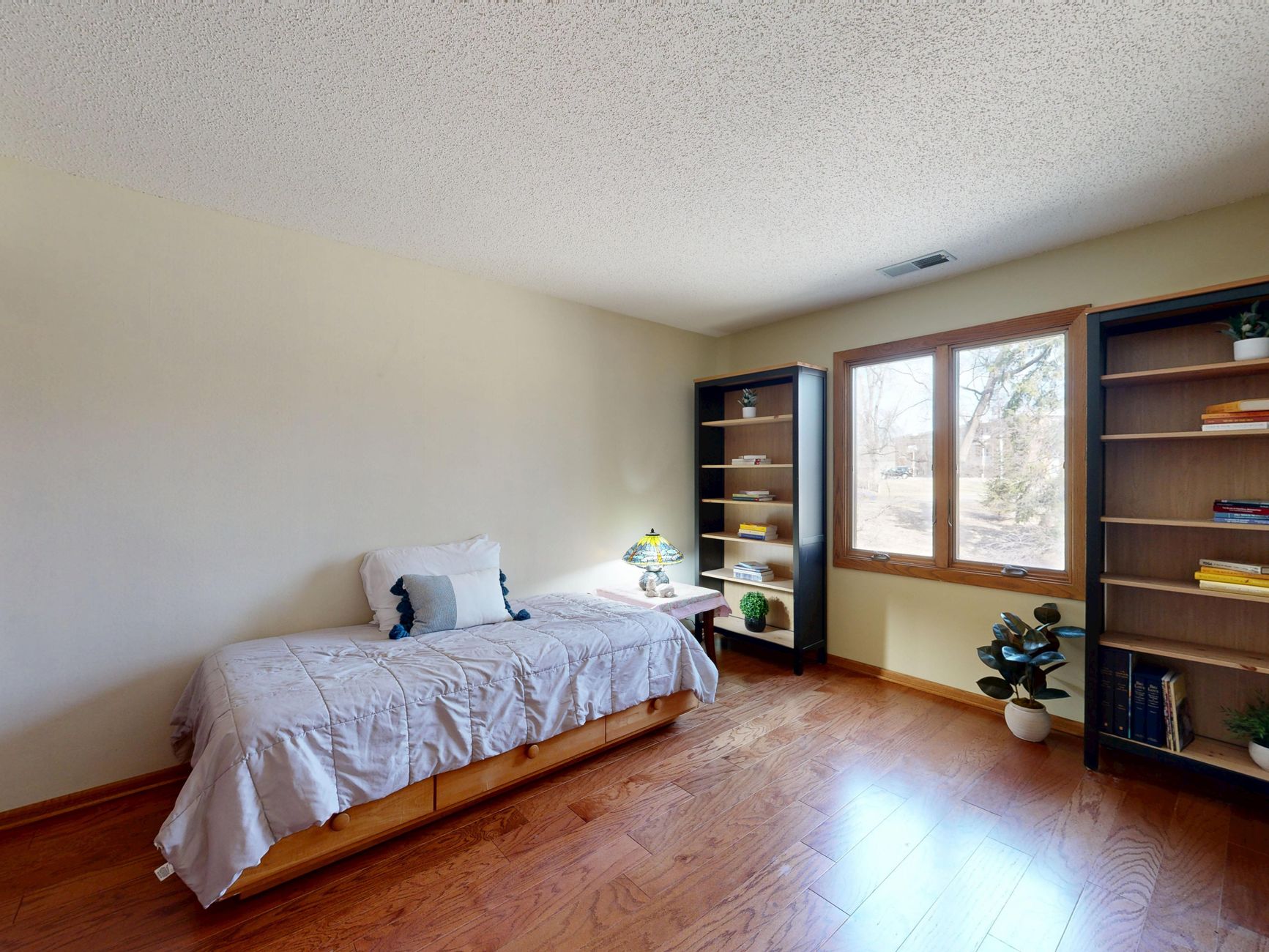
The spare room is the space most sellers ignore until the night before photography day. It's been collecting boxes, spare furniture, and things that don't belong anywhere else. Give it no clear identity and buyers will give it no mental real estate either. In a listing photo, a room without a story reads as wasted space, even when the square metres are generous.
The fix isn't expensive. It's decisive. Pick one clear use, commit to it, and style accordingly. Buyers don't need to see every possible function a room could serve. They need to feel that this home has a place for the things that matter to them.
Choose a function based on your buyer profile
Before you move a single piece of furniture, think about who's most likely to buy this property. A three-bedroom home in a family suburb attracts buyers who want a guest room or a kid's study space. A two-bedroom apartment near a CBD attracts professionals who'd love a dedicated home office. A four-bedroom home in a quiet suburb draws downsizers who might value a craft room or a reading retreat.
The function you choose should feel plausible for the neighbourhood and the home's layout. A yoga studio in a small room with no natural light is a stretch. A compact home office in that same room is immediately believable. Match the story to the audience, and the audience will write themselves into it.
Home office: the most versatile choice
If you're genuinely unsure what to do with the room, a home office is almost always the right answer in 2026. Remote and hybrid work has made a dedicated workspace one of the most searched-for features in residential property. A room styled as a home office signals practicality without alienating buyers who work from home two or three days a week.
Keep it spare. A desk, a chair, a lamp, and one piece of wall art is enough. Avoid filling the desk with gear: one laptop or a simple notebook reads better than three monitors and a cable jungle. For more detail on getting this space camera-ready, the guide on home office styling for property photos covers exactly what to include and what to leave out.
Guest room: warmth without personalisation
A single bed with quality linen, a bedside table, and a small lamp creates immediate warmth. The key word is quality: a cheap duvet set reads cheap in photos. Invest in a neutral, textured cover and add one throw folded at the foot of the bed. Two cushions. A small plant or a single stem vase on the bedside table. Done.
Avoid personalising the space. Framed family photos, novelty cushions, or a theme (nautical, farmhouse, jungle) narrows the appeal. Neutral and inviting works across every buyer demographic. The goal is to make someone feel they could put their own stamp on it tomorrow.
Reading nook or retreat: small rooms with big appeal
If the room is genuinely small, lean into that. A compact armchair angled toward a window, a side table with a single book and a cup, and a floor lamp create a space that feels intentional rather than undersized. Buyers tend to respond emotionally to spaces like this: they're not buying square metres, they're buying the feeling of having somewhere quiet to sit.
The styling principles for a reading nook translate directly to a small spare room. The guide on reading nook styling for property photos explains how to anchor the space and control clutter so the room looks considered rather than afterthought.
What not to do with a spare room
Three approaches consistently hurt listings.
- Leaving it empty. An empty room looks smaller than it is, gives buyers nothing to connect with, and raises questions about whether the space is even usable.
- Using it as storage. Boxes stacked against the wall, a treadmill buried under clothes, a mix of random furniture from other rooms: this is the fastest way to signal that the home lacks storage everywhere else too.
- Committing to something too niche. A darkroom, a taxidermy studio, or a dedicated gaming cave with a specific aesthetic can appeal to one buyer in twenty and alienate the rest. Style neutral, style functional.
Decluttering comes first, always
No styling decision lands well on top of clutter. Before anything else, remove everything from the room that won't be in the final styled shot. Move it to a garage, a storage unit, or a friend's place for the duration of the campaign. Buyers are perceptive. A single cardboard box in the corner of an otherwise styled room is enough to break the illusion.
The broader principle of removing rather than rearranging applies across the whole home. The full room-by-room breakdown in the guide on decluttering for a property sale is worth reading before photography day, not after.
Lighting a spare room correctly
Spare rooms are often the darkest rooms in a house. They face the wrong direction, have a single overhead fitting, or have had blinds shut for months. Before the photographer arrives, open every window treatment and replace any globe with a warm white equivalent of at least 800 lumens. Add a floor lamp or a table lamp to the corner farthest from the window: it lifts shadows and makes the room feel larger. If the room has no natural light at all, a well-lit, warmly styled space still photographs better than a dark one.
Stick to one read, not a hybrid
The most common mistake sellers make is trying to give the room two jobs: a desk in one corner, a daybed in the other, a yoga mat rolled up by the wardrobe. It reads as indecision. Pick one story and tell it completely. The room doesn't need to be everything a buyer might want. It needs to prove that it's something specific, useful, and worth the square metres it occupies.
A spare room styled with a clear purpose photographs well, presents well at inspection, and removes a point of hesitation from the buyer's mental list. That's what good interior styling does: it answers questions before buyers can ask them.